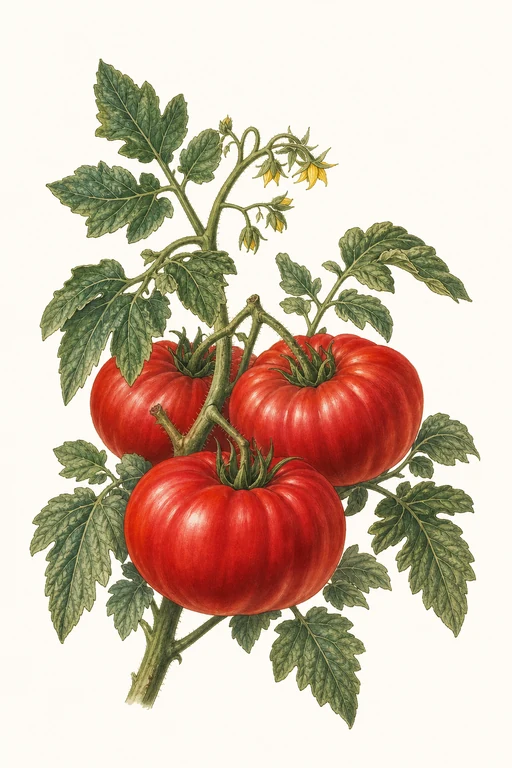
Rutgers
85d to harvest
Sun-warmed, richly meaty Rutgers tomatoes bring a classic beefsteak presence to the garden—deep, true red with a succulent, seed-filled interior and a pleasantly firm bite. Their flavor leans balanced and savory, with a gentle sweetness that shines whether you’re building bold sauces or letting slices stand on their own. Grow Rutgers for dependable midsummer harvests and a hearty, kitchen-ready abundance that rewards attentive watering and steady sun.
Crop Dates
| Milestone | Date |
|---|---|
| Start Indoors | Mar 27th |
| Last Frost | May 15th |
| Transplant / Sow Outdoors | Jul 10th |
| Harvest Begins | Oct 3rd |
| Harvest Ends | Sep 1st |
Crop Details
| Trait | Value |
|---|---|
| Days to Maturity | 85 |
| Sun Requirements | Full Sun |
| Growth Habit | Determinate |
| Support Needed | Cage |
| Planting Depth | Deep |
| Germination Temp (°F) | 75 |
| Min Soil Temp (°F) | 60 |
| Min Night Temp (°F) | 50 |
| Harden Off (days) | 7 |
Recommended Companions
Frequently Asked Questions
How often should I water Rutgers tomatoes during their main growing phase?
During active fruiting, keep the soil consistently moist but not soggy—aim for about 1–2 inches (2.5–5 cm) of water per week depending on heat and rainfall. Water deeply 1–3 times per week rather than small daily sips to keep moisture steady and reduce blossom-end rot and fruit cracking. If the top 1 inch (2.5 cm) of soil dries out, it’s time for a deep watering.
How do I know when Rutgers tomatoes are ready to harvest?
Harvest when fruits are fully colored for the variety and feel firm but slightly springy when gently squeezed. If you see a green shoulder at the stem end, give them a few more days—tomatoes finish color after the first blush. For best flavor, pick in the cooler part of the day and leave the fruit on the plant until it reaches its final red stage.