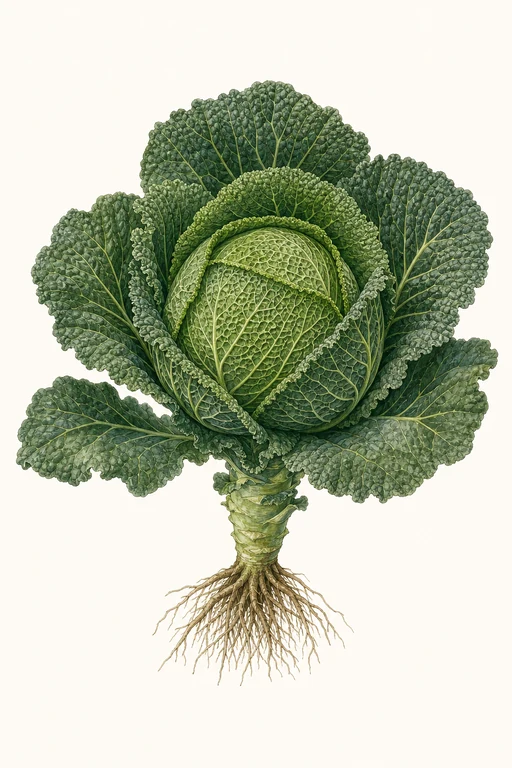
Vertus
85d to harvest
Crisp, savoyed leaves unfurl into a dense, elegant head with a cool, ocean-green glow and a finely quilted texture that feels almost velvety to the eye. “Vertus” develops with steady confidence—tight, uniform curds and a mild, sweet-green flavor that shines in fresh salads and becomes especially expressive when lightly cooked into comforting dishes. A dependable 85-day choice for gardeners who want a handsome winter-ready cabbage with standout surface beauty and satisfying crunch.
Crop Dates
| Milestone | Date |
|---|---|
| Start Indoors | Apr 17th |
| Last Frost | May 15th |
| Transplant / Sow Outdoors | May 15th |
| Harvest Begins | Aug 8th |
| Harvest Ends | Sep 1st |
Crop Details
| Trait | Value |
|---|---|
| Days to Maturity | 85 |
| Sun Requirements | Full Sun |
| Growth Habit | Rosette |
| Support Needed | None |
| Planting Depth | Normal |
| Germination Temp (°F) | 45 |
| Min Soil Temp (°F) | 40 |
| Min Night Temp (°F) | 32 |
| Harden Off (days) | 6 |
Recommended Companions
Frequently Asked Questions
What’s the most common disease pest issue for Brassica oleracea var. capitata (cabbage) and how can I prevent it?
Watch for cabbage aphids and cabbage worms (cabbage loopers/diamondback moth larvae), which chew leaves and leave frass or ragged holes. Use floating row cover from transplanting until heads start to form, and hand-pick larger larvae when you see them. For aphids, spray off with a strong water jet and use insecticidal soap if infestations persist.
How often should I water Brassica oleracea var. capitata during peak head growth (about weeks 4–8 after transplanting)?
Keep soil consistently moist but not soggy—aim for about 1 to 1.5 inches of water per week, split into 2–3 waterings in warm weather. Check by digging 2–3 inches down; the soil should feel evenly damp, not wet or dry. Uneven moisture can slow head formation and increase the risk of head splitting.