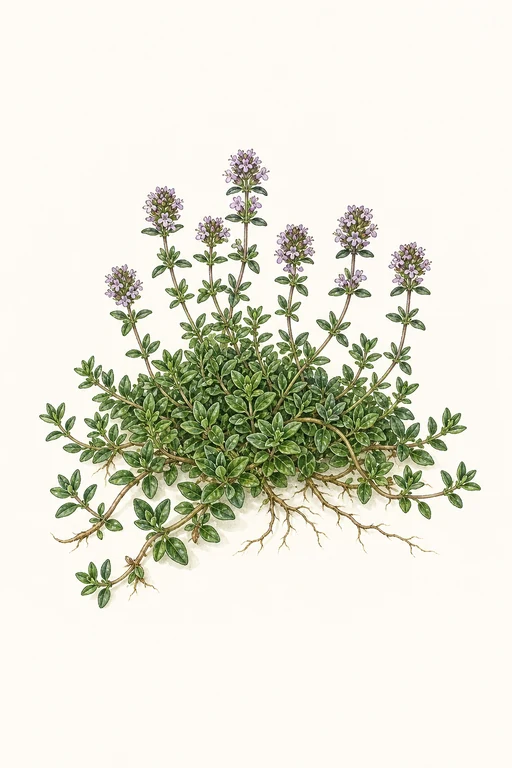
Creeping
60d to harvest
Creeping thyme drapes with a fragrant, mossy carpet—its tiny leaves release a bright, herbal perfume at the slightest touch. At maturity, the foliage forms a low, spreading mat with a fine, velvety texture and a clean, savory flavor that shines in herb-forward blends. Ideal for fresh garnishing and for seasoning roasts, soups, and sauces where its aromatic character can perfume the whole dish.
Crop Dates
| Milestone | Date |
|---|---|
| Start Indoors | Direct Sow |
| Last Frost | May 19th |
| Transplant / Sow Outdoors | May 19th |
| Harvest Begins | Jul 18th |
| Harvest Ends | Sep 21st |
Crop Details
| Trait | Value |
|---|---|
| Days to Maturity | 60 |
| Sun Requirements | Full Sun |
| Growth Habit | Spreading |
| Support Needed | None |
| Planting Depth | Surface |
| Germination Temp (°F) | 65 |
| Min Soil Temp (°F) | 45 |
| Min Night Temp (°F) | 40 |
| Harden Off (days) | 7 |
Recommended Companions
Frequently Asked Questions
What pest or disease most commonly affects creeping thyme (Thymus serpyllum), and how can I prevent it?
Creeping thyme commonly suffers from root rot when the soil stays wet, often showing as wilting plus blackened roots and a patchy die-back. Let the bed dry slightly between waterings and plant in gritty, fast-draining soil; if rot appears, pull out affected plugs and improve drainage rather than trying to “save” them with extra watering. Keep airflow by not over-thickening the mat, especially in humid weather.
How often should I water creeping thyme during its main growing phase?
During active growth (after establishment), water only when the top 1–2 cm of soil feels dry, usually about once every 7–14 days depending on heat and soil drainage. Aim to wet the root zone thoroughly, but avoid frequent light watering that keeps the surface constantly damp. Once the mat is established, reduce watering further because Thymus serpyllum is drought-tolerant and performs best with drier conditions.