
Cucamelon
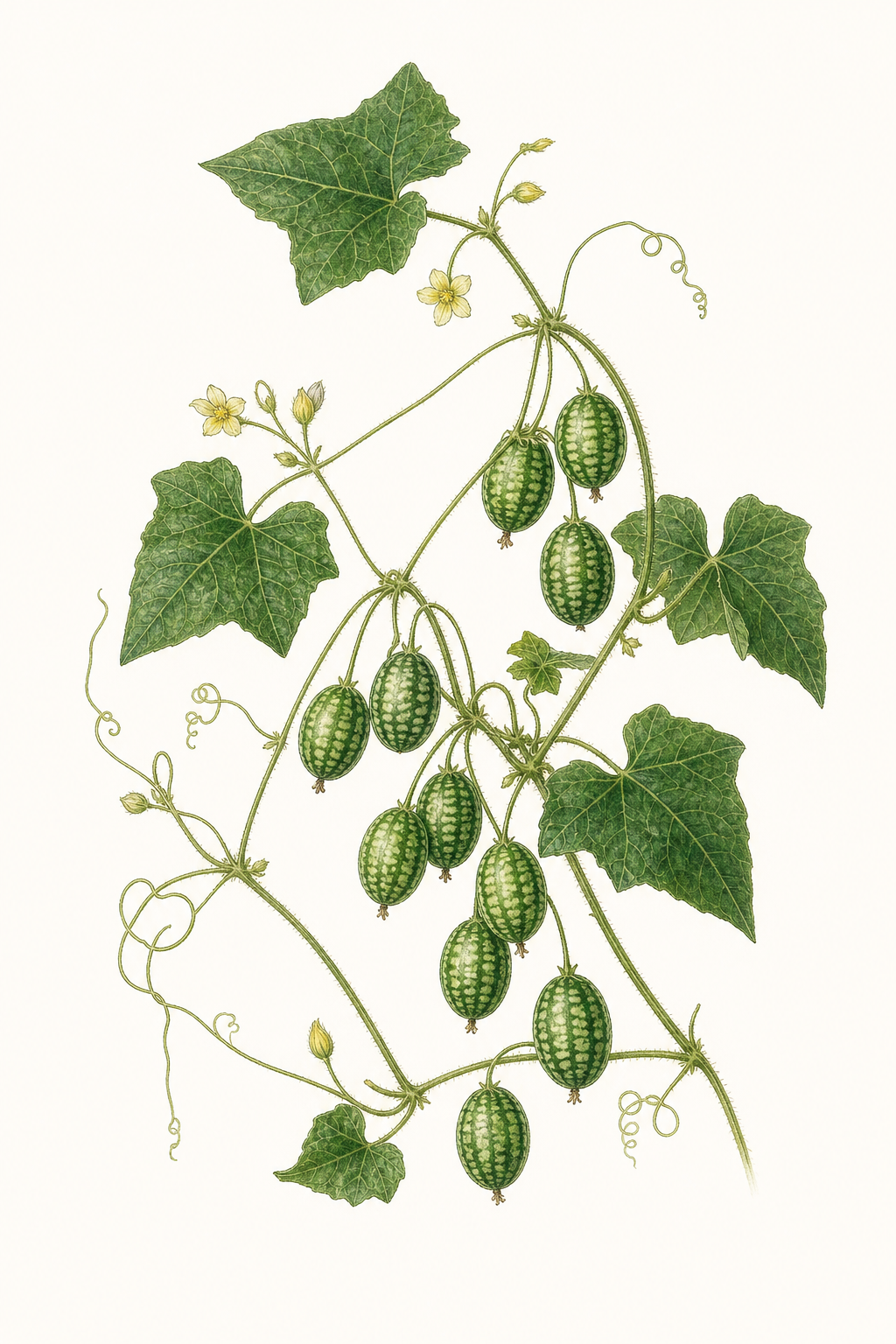
Sweetly tart and vividly aromatic, Cucamelon fruits arrive like tiny watermelons in miniature—crisp, juicy, and bursting with a r…
Crop Dates
| Milestone | Date |
|---|---|
| Start Indoors | Direct Sow |
| Last Frost | May 19th |
| Transplant / Sow Outdoors | Jun 2nd |
| Harvest Begins | Aug 11th |
| Harvest Ends | Sep 21st |
Crop Details
| Trait | Value |
|---|---|
| Days to Maturity | 70 |
| Sun Requirements | Full Sun |
| Growth Habit | Vine |
| Support Needed | Trellis |
| Planting Depth | Normal |
| Germination Temp (°F) | 70 |
| Min Soil Temp (°F) | 65 |
| Min Night Temp (°F) | 55 |
| Harden Off (days) | 10 |
Recommended Companions
Frequently Asked Questions
What pest or disease most commonly affects cucamelon (Melothria scabra), and what should I do?
How often should I water cucamelons during active growth, and what soil moisture should I maintain?
How can I tell when cucamelons are ready to harvest?
Sweetly tart and vividly aromatic, Cucamelon fruits arrive like tiny watermelons in miniature—crisp, juicy, and bursting with a refreshing snap. The skin is a charming mottled green, turning to a warm, sunlit yellow-green as it ripens, while the flesh stays tender and bright for effortless snacking straight from the vine. Grow Cucamelon for playful, high-yield harvests that shine in fresh salads, quick pickles, and lively garnishes, adding a garden-to-plate burst of color and tang.
Sowing Tips

Transplant Conditions
Wait until soil reaches 65°F and nights stay above 55°F before moving outdoors. Harden off for 10 days first.

Direct Sow Preferred
Sensitive roots — does not transplant well. If starting indoors, use biodegradable pots and disturb roots as little as possible when moving outdoors.
Expert Note

Warm soils are key—wait until nights are reliably warm and use a trellis to keep the vigorous vines off the ground for cleaner fruit.