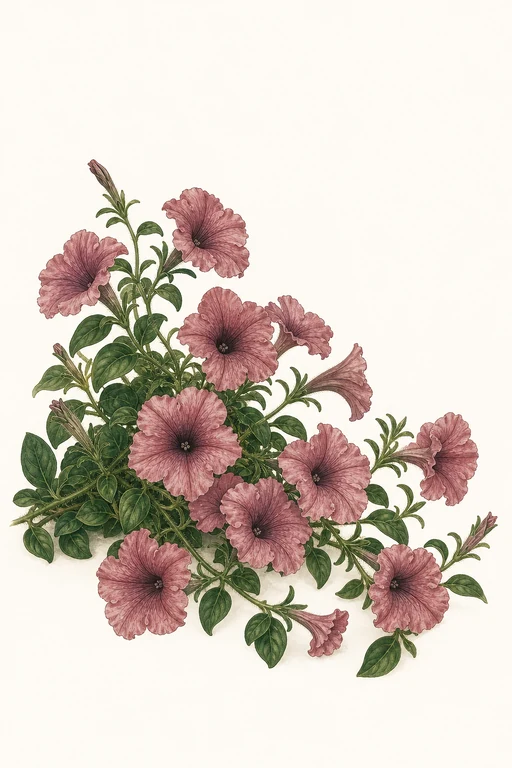
Debonair Dusty Rose
70d to harvest
Velvety petals bloom in a misty, dusty-rose haze, as if soft watercolor has been brushed across each flower. Debonair Dusty Rose trails with a graceful, spreading habit, producing an abundance of blooms with a gently ruffled texture that catches the light from every angle. Ideal for hanging baskets and containers, it shines as a long-season ornamental—thriving in sunny spots and rewarding you with a steady parade of showy color.
Crop Dates
| Milestone | Date |
|---|---|
| Start Indoors | Mar 10th |
| Last Frost | May 19th |
| Transplant / Sow Outdoors | May 19th |
| Harvest Begins | Jul 28th |
| Harvest Ends | Sep 21st |
Crop Details
| Trait | Value |
|---|---|
| Days to Maturity | 70 |
| Sun Requirements | Full Sun |
| Growth Habit | Spreading |
| Support Needed | None |
| Planting Depth | Surface |
| Germination Temp (°F) | 70 |
| Min Soil Temp (°F) | 50 |
| Min Night Temp (°F) | 50 |
| Harden Off (days) | 7 |
Frequently Asked Questions
What pest or disease most commonly affects Petunia × atkinsiana, and how can I treat it at home?
For petunias (Petunia × atkinsiana), gray mold (Botrytis) and botrytis-like stem/flower rot show up as brown, soft spots after cool, humid weather or crowded plants. Remove affected blooms and any leaves touching soil, then improve airflow by thinning and spacing plants; water at the soil line in the morning so foliage dries fast. If rot keeps spreading, spray a labeled fungicide for gray mold and repeat according to the label, starting as soon as you see first symptoms.
How do I know when Petunia × atkinsiana is ready to harvest?
Petunia × atkinsiana is typically grown for flowers rather than “harvesting” for a specific maturity stage. Harvest readiness is when individual blooms are fully colored and open, with petals flat to slightly ruffled and no browned, mushy areas—this usually begins around 70 days from sowing under good conditions. For longest bloom, deadhead by removing spent flowers (pinch or snip just above the leaf pair) as soon as they fade, instead of waiting for seed pods to form.