
Fife Creek Cowhorn
Okra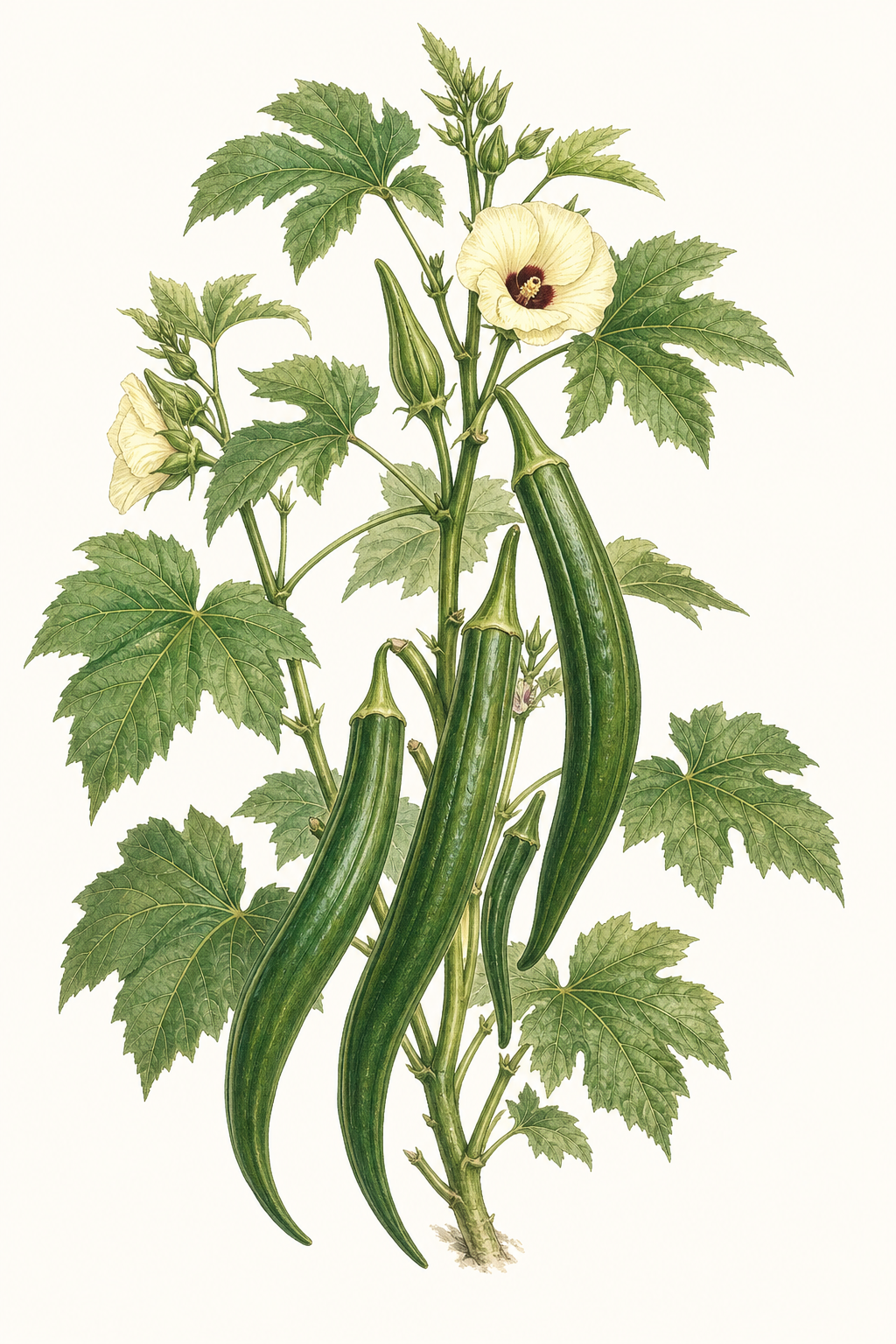
Tender pods of Fife Creek Cowhorn arrive in a steady parade, draped in a rich deep forest-green and shaped like graceful, gently …
Crop Dates
| Milestone | Date |
|---|---|
| Start Indoors | Direct Sow |
| Last Frost | May 19th |
| Transplant / Sow Outdoors | Jun 2nd |
| Harvest Begins | Aug 1st |
| Harvest Ends | Sep 21st |
Crop Details
| Trait | Value |
|---|---|
| Days to Maturity | 60 |
| Sun Requirements | Full Sun |
| Growth Habit | Upright |
| Support Needed | None |
| Planting Depth | Normal |
| Germination Temp (°F) | 80 |
| Min Soil Temp (°F) | 65 |
| Min Night Temp (°F) | 55 |
| Harden Off (days) | 12 |
Recommended Companions
Frequently Asked Questions
What pest or disease issue commonly affects Abelmoschus esculentus (okra), and how do I control it?
How often should I water okra during its main growing phase?
How can I tell when Abelmoschus esculentus is ready to harvest?
Tender pods of Fife Creek Cowhorn arrive in a steady parade, draped in a rich deep forest-green and shaped like graceful, gently ridged horns. Slice through with a crisp, succulent bite and a mild, clean flavor that shines in quick skillet favorites, hearty stews, and silky sauces—plus it’s a natural for pickling when you want a tangy crunch. At about 60 days from sowing, this market-class okra rewards home gardeners with reliable harvests and a distinctly elegant pod silhouette.
Sowing Tips

Transplant Conditions
Wait until soil reaches 65°F and nights stay above 55°F before moving outdoors. Harden off for 12 days first.

Direct Sow Preferred
Sensitive roots — does not transplant well. If starting indoors, use biodegradable pots and disturb roots as little as possible when moving outdoors.
Expert Note

If you choose to start indoors, warm the soil thoroughly and transplant only after nights stay reliably warm to avoid slow, stunted growth.