
Golden Beauty Casaba
Melon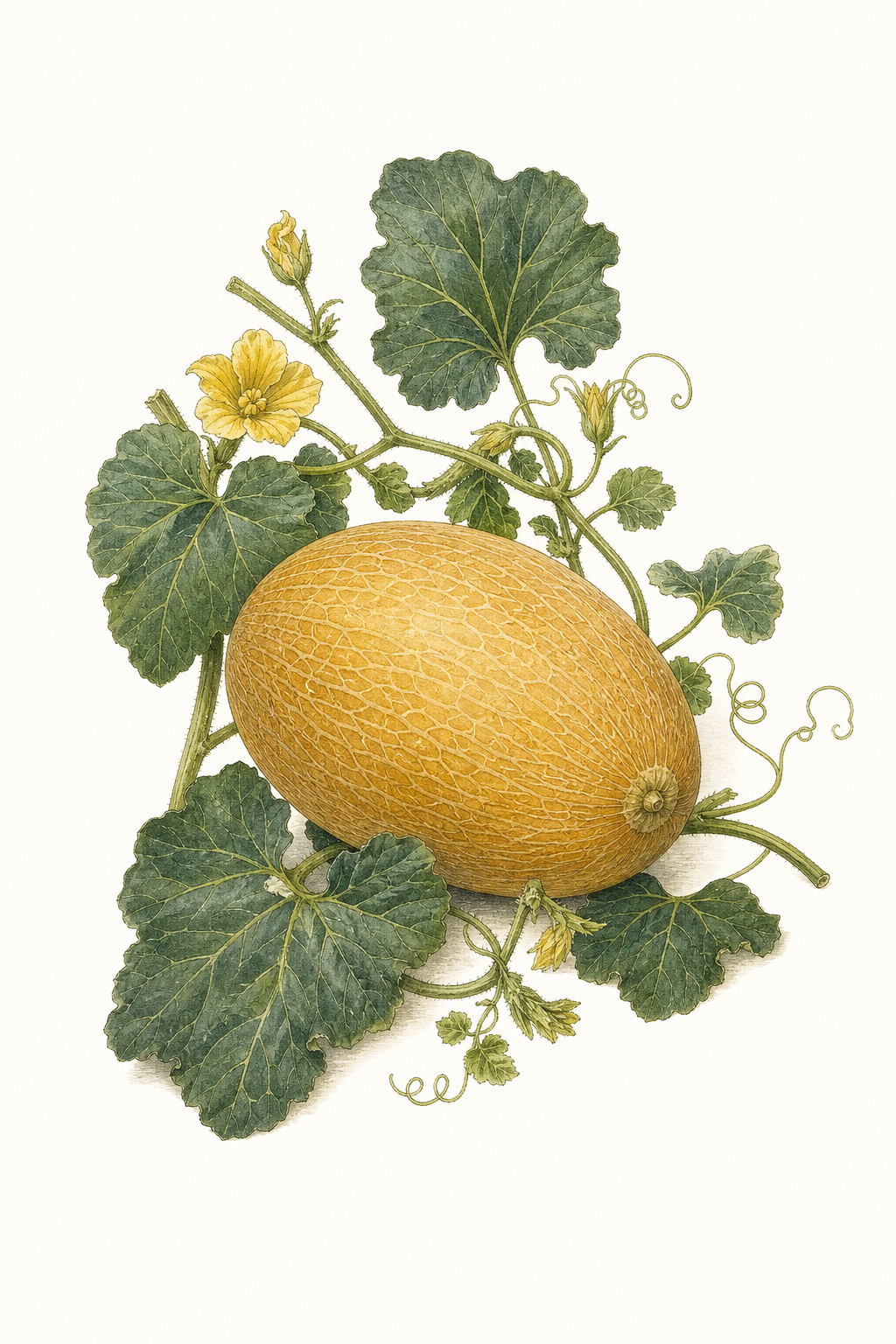
Sun-warmed and honeyed, Golden Beauty Casaba fills the garden with a softly perfumed glow—its flesh is richly aromatic, melting-t…
Crop Dates
| Milestone | Date |
|---|---|
| Start Indoors | Direct Sow |
| Last Frost | May 19th |
| Transplant / Sow Outdoors | Jun 2nd |
| Harvest Begins | Sep 5th |
| Harvest Ends | Sep 21st |
Crop Details
| Trait | Value |
|---|---|
| Days to Maturity | 95 |
| Sun Requirements | Full Sun |
| Growth Habit | Vine |
| Support Needed | Trellis |
| Planting Depth | Normal |
| Germination Temp (°F) | 75 |
| Min Soil Temp (°F) | 70 |
| Min Night Temp (°F) | 55 |
| Harden Off (days) | 10 |
Recommended Companions
Frequently Asked Questions
What pest or disease problem is most common on Cucumis melo (casaba melon), and how can I manage it?
How often should I water Cucumis melo during the main growing phase?
How do I tell when Golden Beauty casaba (Cucumis melo) is ready to harvest?
Sun-warmed and honeyed, Golden Beauty Casaba fills the garden with a softly perfumed glow—its flesh is richly aromatic, melting-tender, and sweet with a mellow, almost custard-like richness. Expect a smooth, creamy texture that shines in fresh slices and makes a fragrant centerpiece for fruit-forward preserves and spoonable sauces. A casaba for growers who love a long, patient season and the rewarding, golden finish at harvest (about 95 days).
Sowing Tips

Transplant Conditions
Wait until soil reaches 70°F and nights stay above 55°F before moving outdoors. Harden off for 10 days first.

Direct Sow Preferred
Sensitive roots — does not transplant well. If starting indoors, use biodegradable pots and disturb roots as little as possible when moving outdoors.
Expert Note

Warm, well-drained soil and consistent watering during early fruit set are key—casaba is tender and won’t tolerate cool nights well.