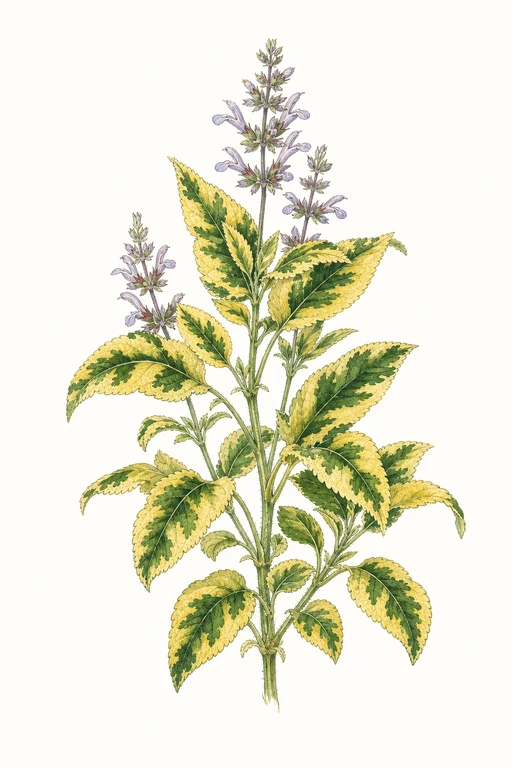
Golden Sage
90d to harvest
Golden Sage dazzles with sunlit variegation—soft, golden centers brushed with cool green margins—offering an aromatic, gently resinous fragrance that blooms as the foliage warms. The leaves are supple and velvety, with a graceful, upright habit that makes a striking garden accent while delivering bold sage character for drying and simmering blends. Grow it for its long-lasting ornamental appeal and its distinctive, high-impact flavor profile that elevates herb-forward preparations and fragrant infusions.
Crop Dates
| Milestone | Date |
|---|---|
| Start Indoors | Apr 7th |
| Last Frost | May 19th |
| Transplant / Sow Outdoors | Jun 30th |
| Harvest Begins | Sep 28th |
| Harvest Ends | Sep 21st |
Crop Details
| Trait | Value |
|---|---|
| Days to Maturity | 90 |
| Sun Requirements | Full Sun |
| Growth Habit | Upright |
| Support Needed | None |
| Planting Depth | Normal |
| Germination Temp (°F) | 70 |
| Min Soil Temp (°F) | 60 |
| Min Night Temp (°F) | 50 |
| Harden Off (days) | 10 |
Recommended Companions
Frequently Asked Questions
What pest or disease most often affects Salvia officinalis (golden sage), and how can I manage it?
In home gardens, golden sage commonly suffers from powdery mildew and root/crown rot when air is humid and soil stays wet. Water at the base, space plants to improve airflow, and avoid overhead irrigation; if you see powdery mildew, remove heavily affected leaves and spray an appropriate horticultural fungicide early in the outbreak. To prevent rot, grow it in well-draining soil and keep the crown out of standing water, especially in cool, wet periods.
How often should I water Salvia officinalis during its main growing phase?
During active growth, water only when the top 1–2 inches of soil feels dry, then water deeply until moisture reaches the root zone. Golden sage prefers evenly moist-but-not-wet conditions, and frequent light watering can encourage weak growth and mildew. Once established, it tolerates drought well—reduce watering during hot spells if the soil is staying consistently damp.