
Hopi Black Dye
Sunflower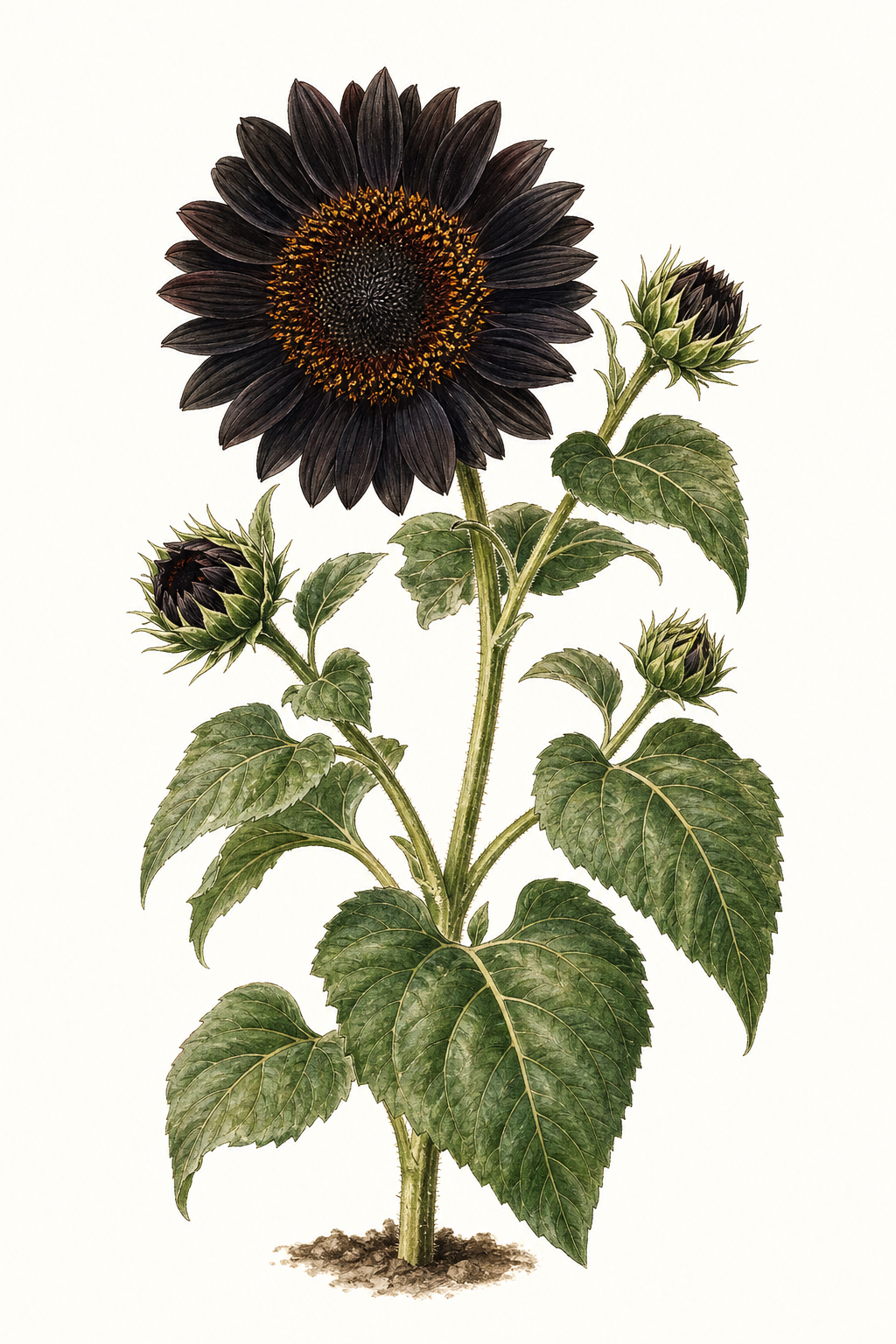
Velvety, inky petals unfurl in late season, as if dusk has been gathered into a single, towering bloom—Hopi Black Dye delivers a …
Crop Dates
| Milestone | Date |
|---|---|
| Start Indoors | Direct Sow |
| Last Frost | May 19th |
| Transplant / Sow Outdoors | May 19th |
| Harvest Begins | Aug 17th |
| Harvest Ends | Sep 21st |
Crop Details
| Trait | Value |
|---|---|
| Days to Maturity | 90 |
| Sun Requirements | Full Sun |
| Growth Habit | Upright |
| Support Needed | None |
| Planting Depth | Normal |
| Germination Temp (°F) | 70 |
| Min Soil Temp (°F) | 55 |
| Min Night Temp (°F) | 40 |
| Harden Off (days) | Not Required |
Recommended Companions
Frequently Asked Questions
What pests commonly attack Helianthus annuus (Hopi Black Dye), and what can I do if I see them?
How often should I water Hopi Black Dye (Helianthus annuus) during the main growing period?
How can I tell when Hopi Black Dye (Helianthus annuus) is ready to harvest?
Velvety, inky petals unfurl in late season, as if dusk has been gathered into a single, towering bloom—Hopi Black Dye delivers a dramatic, near-black presence with a softly velour-like texture. The flower heads are rich and substantial, making them a striking centerpiece in the garden while also offering abundant pollen for pollinators. Grow Hopi Black Dye for bold visual impact and a deep, memorable color story that carries from bud to bloom.
Sowing Tips

Transplant Conditions
Wait until soil reaches 55°F and nights stay above 40°F before moving outdoors.
Expert Note

Direct-sow in warm soil once frost danger is past (or use a raised bed for quicker warming) and thin to strong plants for best seed fill and dye-quality heads.