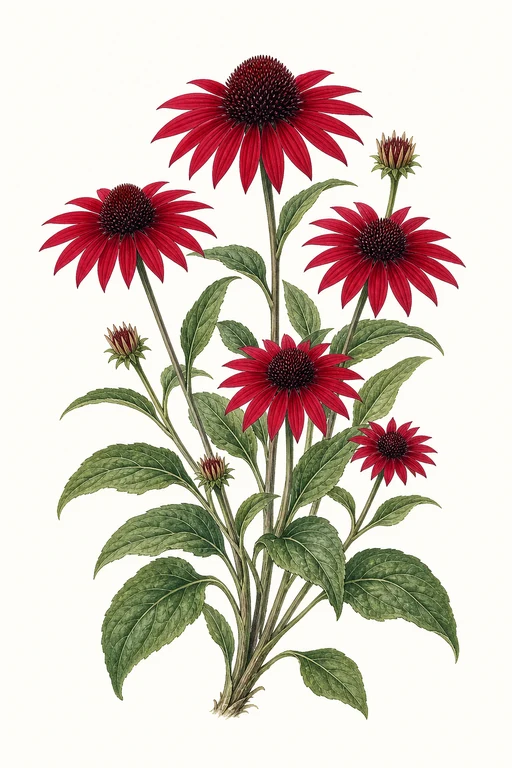
Rubinstern (Ruby Star)
70d to harvest
Rubinstern (Ruby Star) blooms with a radiant, ruby-red brilliance that seems to glow above sturdy, upright stems—petals that flare like a starburst and a bold, dark center that holds the gaze. The flowers carry a firm, slightly velvety texture and a long-lasting presence in the garden, making them as satisfying in the landscape as they are in fresh bouquets. Grow Rubinstern for dependable summer color and a pollinator magnet that keeps visiting wings returning from bud to bloom.
Crop Dates
| Milestone | Date |
|---|---|
| Start Indoors | Mar 24th |
| Last Frost | May 19th |
| Transplant / Sow Outdoors | Jun 30th |
| Harvest Begins | Sep 8th |
| Harvest Ends | Sep 21st |
Crop Details
| Trait | Value |
|---|---|
| Days to Maturity | 70 |
| Sun Requirements | Full Sun |
| Growth Habit | Upright |
| Support Needed | None |
| Planting Depth | Normal |
| Germination Temp (°F) | 70 |
| Min Soil Temp (°F) | 60 |
| Min Night Temp (°F) | 50 |
| Harden Off (days) | 7 |
Recommended Companions
Frequently Asked Questions
What’s a common pest or disease on Echinacea purpurea (purple coneflower) and how can I fix it?
Echinacea purpurea is commonly affected by powdery mildew, especially in humid weather and when plants are crowded. Improve airflow by spacing plants and watering at the soil line (not the leaves), then spray with a labeled fungicide at the first signs of white powdery growth. Remove heavily infected leaves early to slow spread.
How often should I water Echinacea purpurea during its main growing phase?
During active growth (after plants establish and before flowering), keep soil evenly moist but not soggy—aim for watering about 1 inch per week total, split into 1–2 deep waterings if needed. Let the top 1–2 inches of soil dry between waterings to prevent root stress and reduce mildew risk. Once established, it will tolerate some dryness, but consistent moisture helps it form strong stems and flowers.