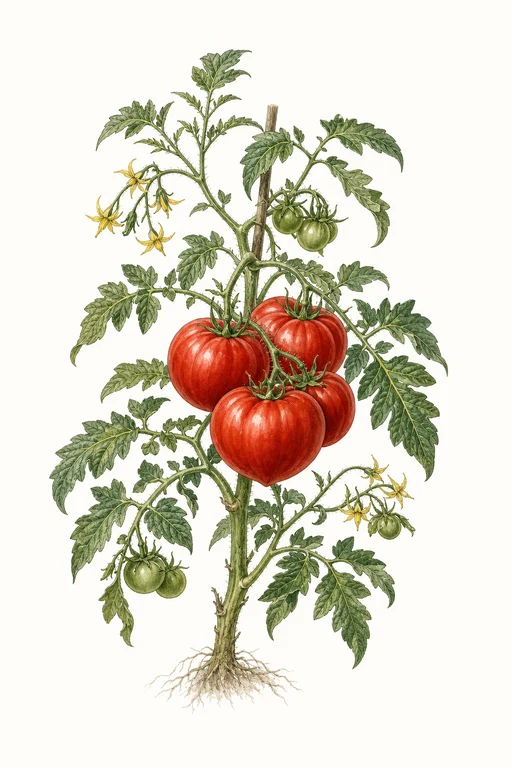
Fourth of July
65d to harvest
Bursting with sun-warmed sweetness and a bright, classic tomato tang, ‘Fourth of July’ delivers glossy, red fruit that feel satisfyingly substantial in the hand. The flesh is richly juicy with a balanced, seed-studded bite—ideal for thick slices that hold their shape on the plate. Grow this slicing tomato for bold summer color and dependable performance, and enjoy its vibrant flavor in fresh salads, sandwich-style favorites, and bold sauces that showcase its true tomato character.
Crop Dates
| Milestone | Date |
|---|---|
| Start Indoors | Mar 27th |
| Last Frost | May 15th |
| Transplant / Sow Outdoors | Jul 3rd |
| Harvest Begins | Sep 6th |
| Harvest Ends | Sep 24th |
Crop Details
| Trait | Value |
|---|---|
| Days to Maturity | 65 |
| Sun Requirements | Full Sun |
| Growth Habit | Determinate |
| Support Needed | Cage |
| Planting Depth | Deep |
| Germination Temp (°F) | 75 |
| Min Soil Temp (°F) | 60 |
| Min Night Temp (°F) | 50 |
| Harden Off (days) | 10 |
Recommended Companions
Frequently Asked Questions
What pest or disease most commonly affects Solanum lycopersicum (Fourth of July tomato), and how can I address it?
In wet or humid weather, tomato late blight (and sometimes early blight) can strike Solanum lycopersicum, starting as dark, expanding leaf spots that may progress quickly. Remove infected leaves as soon as you see symptoms, keep foliage as dry as possible, and apply a labeled tomato fungicide early according to package directions (especially if the forecast calls for repeated wet days). Space plants for airflow and water at the soil line rather than overhead to slow spread.
How often should I water during the main growing phase of Fourth of July tomatoes?
During active fruiting, water deeply about 1–2 times per week, aiming for consistently moist (not soggy) soil in the top 6–8 inches. If you’re getting hot, windy weather, check moisture 1 inch down—water when it feels dry at that depth to help prevent blossom-end rot and cracking. Keep watering steady rather than letting the soil dry out completely between bursts.