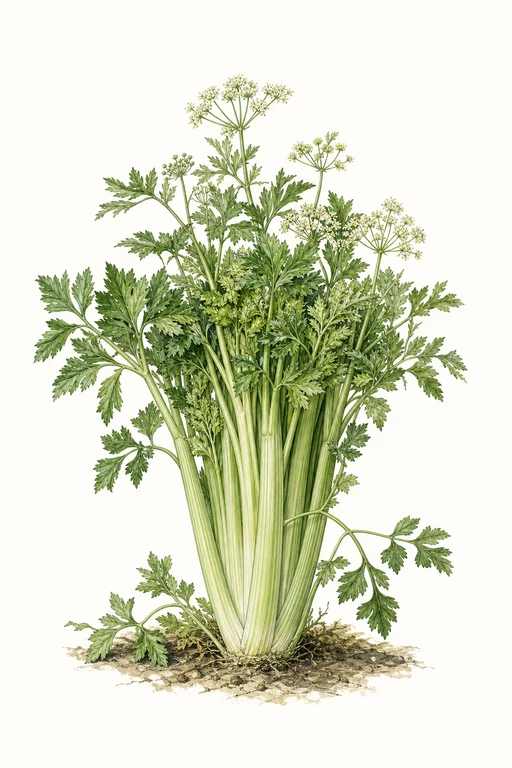
Kelvin
90d to harvest
Crisp and intensely aromatic, Kelvin celery forms tall, tightly gathered stalks with a cool, clean snap and a bright, herbaceous flavor. The texture stays pleasantly firm from garden to table, making these slender ribs ideal for fresh bunches and for enlivening sauces, soups, and pickling brines. Grow Kelvin for a dependable 90-day season and a standout, upright clump that looks as good as it tastes.
Crop Dates
| Milestone | Date |
|---|---|
| Start Indoors | Mar 6th |
| Last Frost | May 15th |
| Transplant / Sow Outdoors | May 8th |
| Harvest Begins | Aug 6th |
| Harvest Ends | Sep 24th |
Crop Details
| Trait | Value |
|---|---|
| Days to Maturity | 90 |
| Sun Requirements | Part Sun |
| Growth Habit | Upright |
| Support Needed | None |
| Planting Depth | Normal |
| Germination Temp (°F) | 70 |
| Min Soil Temp (°F) | 45 |
| Min Night Temp (°F) | 35 |
| Harden Off (days) | 7 |
Recommended Companions
Frequently Asked Questions
Why are my celery (Apium graveolens var. dulce) plants getting brown, crusty spots on leaves and collapsing, and what should I do?
Celery commonly develops fungal leaf blights and stem rots, especially when foliage stays wet and air can’t move. Remove and discard badly affected leaves, water at the soil line (not over the top), and thin plants so they’re not crowded. If the weather is persistently humid, apply a labeled fungicide for celery/leaf blight and avoid harvesting from wet plants to reduce spread.
How often should I water sweet celery during the main growing phase to keep it tender (not stringy)?
During the active growth period, keep the soil evenly moist—aim for about 1–2 inches of water per week, adjusting for heat and container size. Water deeply so moisture reaches the root zone, and avoid letting the soil dry out between waterings because celery responds with toughness and pithiness. Mulch around plants to stabilize moisture, especially in part-sun conditions where the topsoil can dry quickly.