
Mantanghong
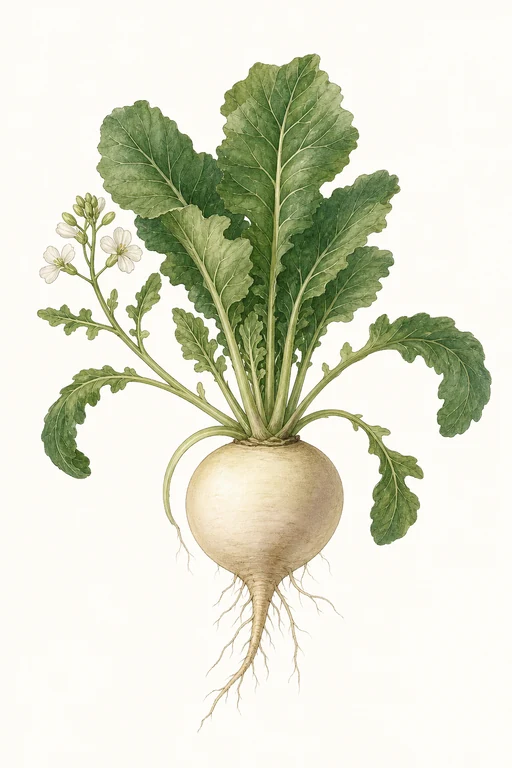
Juicy and vividly sweet, Mantanghong watermelon radish blooms with a crisp, water-bright crunch and a clean, peppery lift that fades into mellow sweetness. The flesh shows a striking gradient—blush to rosy red—framed by a smooth, pale exterior that feels cool and satin-sleek in the hand. Grow Mantanghong for standout fresh slices and showy radish platters, or for quick roasting and vibrant pickling where its color stays beautifully alive.
Sowing Tips

Transplant Conditions
Wait until soil reaches 45°F and nights stay above 28°F before moving outdoors.
Expert Note

For the mild, slightly sweet flavor and best pink color, keep soil moisture consistent and avoid hot spells that push radishes to bolt.
Crop Dates
| Milestone | Date |
|---|---|
| Start Indoors | Direct Sow |
| Last Frost | May 15th |
| Transplant / Sow Outdoors | May 15th |
| Harvest Begins | Jul 4th |
| Harvest Ends | Sep 24th |
Crop Details
| Trait | Value |
|---|---|
| Days to Maturity | 50 |
| Sun Requirements | Full Sun |
| Growth Habit | Taproot |
| Support Needed | None |
| Planting Depth | Normal |
| Germination Temp (°F) | 55 |
| Min Soil Temp (°F) | 45 |
| Min Night Temp (°F) | 28 |
| Harden Off (days) | Not Required |
Recommended Companions


Frequently Asked Questions
What pest or disease commonly affects Raphanus sativus (mantanghong), and how can I treat it?
How often should I water mantanghong during the main growing phase?
How do I know when mantanghong is ready to harvest?
Sowing Tips
Transplant Conditions
Wait until soil reaches 45°F and nights stay above 28°F before moving outdoors.
Expert Note
For the mild, slightly sweet flavor and best pink color, keep soil moisture consistent and avoid hot spells that push radishes to bolt.
Juicy and vividly sweet, Mantanghong watermelon radish blooms with a crisp, water-bright crunch and a clean, peppery lift that fades into mellow sweetness. The flesh shows a striking gradient—blush to rosy red—framed by a smooth, pale exterior that feels cool and satin-sleek in the hand. Grow Mantanghong for standout fresh slices and showy radish platters, or for quick roasting and vibrant pickling where its color stays beautifully alive.