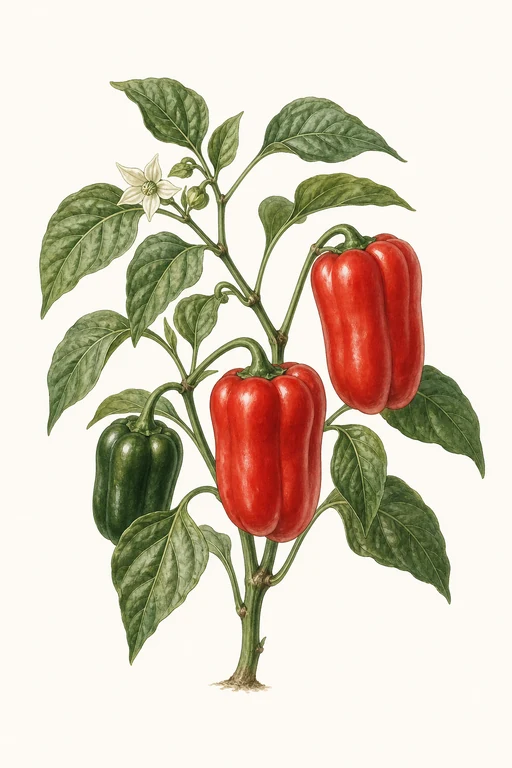
Melrose
75d to harvest
Sun-warmed and glossy, Melrose sweet peppers bring a crisp, juicy snap with a gently sweet, garden-fresh flavor—never the bite of heat. Fruits mature in a handsome progression from deep green to a rich, burnished red, with thick walls that hold their shape beautifully for sweet frying favorites. Grow Melrose for abundant, uniform peppers that shine in the garden and deliver satisfying crunch in every pan-ready moment.
Crop Dates
| Milestone | Date |
|---|---|
| Start Indoors | Mar 20th |
| Last Frost | May 15th |
| Transplant / Sow Outdoors | Jun 26th |
| Harvest Begins | Sep 9th |
| Harvest Ends | Sep 24th |
Crop Details
| Trait | Value |
|---|---|
| Days to Maturity | 75 |
| Sun Requirements | Full Sun |
| Growth Habit | Bush |
| Support Needed | Cage |
| Planting Depth | Normal |
| Germination Temp (°F) | 80 |
| Min Soil Temp (°F) | 60 |
| Min Night Temp (°F) | 50 |
| Harden Off (days) | 10 |
Recommended Companions
Frequently Asked Questions
What pest or disease problem most often affects Capsicum annuum (Melrose) and how can I manage it?
In home gardens, hot-pepper types like Capsicum annuum are commonly hit by aphids and then secondary black sooty mold, and they can also develop blossom-end rot from inconsistent calcium uptake during rapid growth. Check leaves and new growth twice weekly for clusters of aphids and blast them off with water, then release or encourage beneficial insects; if infestations persist, use insecticidal soap on the undersides of leaves. Prevent blossom-end rot by keeping soil moisture steady (especially once fruits set) and avoid letting containers or beds dry out between waterings.
How often should I water Melrose (Capsicum annuum) during the main growing and fruiting phase?
During flowering and fruiting, keep the root zone evenly moist—typically about 1–2 inches (2.5–5 cm) of water per week total, adjusted for heat and wind. Water deeply so moisture reaches well into the bed, then wait until the top 1 inch (2–3 cm) of soil is slightly dry before watering again. Mulch around plants to reduce swings; moisture fluctuations are a frequent trigger for blossom-end rot.