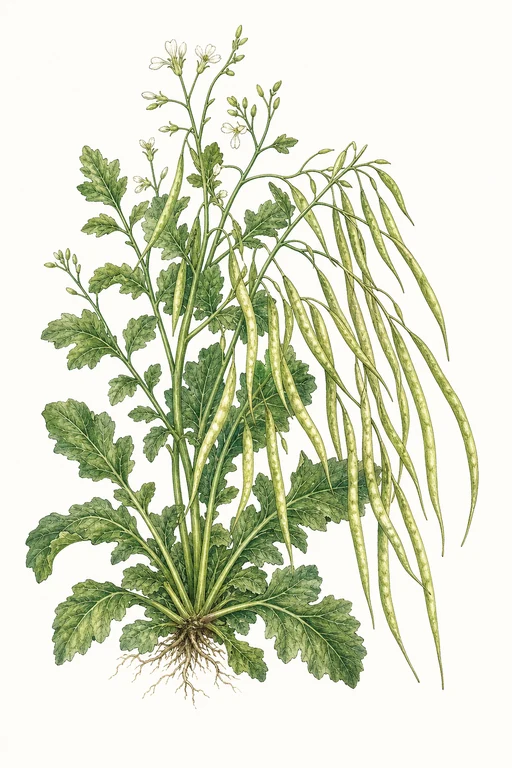
Rat's Tail
Radish
🌱 45d to harvest
Upright
A cascade of tender, pea-green pods—so vivid they seem to glow—hangs from vigorous stems in a long, elegant “rat’s tail” line. Ra…
Crop Dates
| Milestone | Date |
|---|---|
| Start Indoors | Direct Sow |
| Last Frost | May 13th |
| Transplant / Sow Outdoors | May 13th |
| Harvest Begins | Jun 27th |
| Harvest Ends | Sep 27th |
Crop Details
| Trait | Value |
|---|---|
| Days to Maturity | 45 |
| Sun Requirements | Full Sun |
| Growth Habit | Upright |
| Support Needed | None |
| Planting Depth | Surface |
| Germination Temp (°F) | 55 |
| Min Soil Temp (°F) | 40 |
| Min Night Temp (°F) | 28 |
| Harden Off (days) | Not Required |
Recommended Companions
Frequently Asked Questions
How do I prevent and treat common problems like flea beetles on Raphanus sativus (rat’s tail radish)?
Flea beetles commonly chew small shot-holes in rat’s tail radish leaves, reducing growth before pods form. Use a fine insect net or row cover once plants are up, and keep the bed weed-free; if damage starts, treat promptly with an insecticidal soap or a labeled pyrethrin product following label directions. Avoid letting plants get stressed (especially from dry soil), since stressed plants are more heavily attacked.
How often should I water rat’s tail radish (Raphanus sativus) during the main pod-forming phase?
During active pod/flower-stalk growth (roughly weeks 3–6), keep the soil evenly moist but not soggy—about 1 inch of water per week, split into 1–2 waterings as needed. If the top 1 inch of soil dries out completely between waterings, the pods can turn tougher and less tender; water deeply to re-wet the root zone. Mulch lightly to reduce moisture swings, which helps maintain tender, fast-growing pods.
What signs tell me rat’s tail radish (Raphanus sativus) is ready to harvest?
Harvest when the long, slender seed pods (the “rat’s tail” parts) are fully formed but still crisp and tender—typically around 45 days from sowing. Pods should feel firm yet not woody, and the seeds inside should be small and developing rather than hard. If you see the pods getting thick, tough, or overly dry, pull them promptly to keep eating quality.