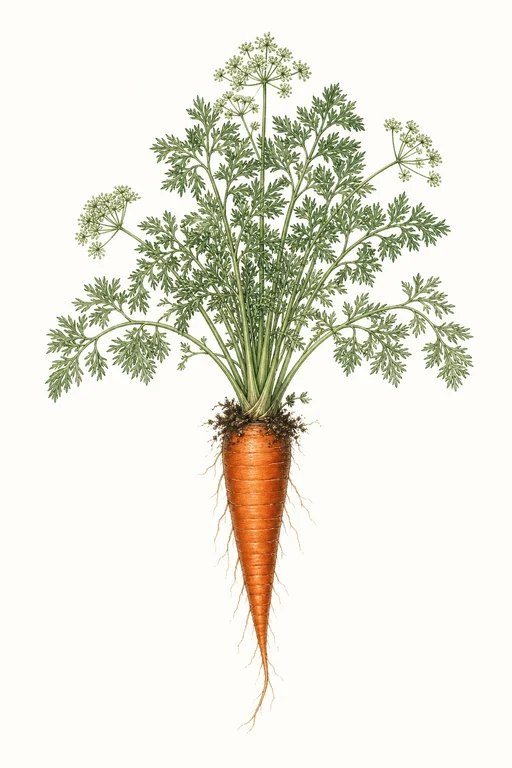
Amsterdam Forcing
Carrot
🌱 70d to harvest
Rosette
Sweet, carrot-scented sunshine fills the garden as Amsterdam Forcing develops—tender roots with a crisp, fine-grained bite and a …
Crop Dates
| Milestone | Date |
|---|---|
| Start Indoors | Direct Sow |
| Last Frost | May 8th |
| Transplant / Sow Outdoors | May 8th |
| Harvest Begins | Jul 17th |
| Harvest Ends | Sep 30th |
Crop Details
| Trait | Value |
|---|---|
| Days to Maturity | 70 |
| Sun Requirements | Full Sun |
| Growth Habit | Rosette |
| Support Needed | None |
| Planting Depth | Surface |
| Germination Temp (°F) | 55 |
| Min Soil Temp (°F) | 45 |
| Min Night Temp (°F) | 28 |
| Harden Off (days) | Not Required |
Recommended Companions
Frequently Asked Questions
How do I manage downy mildew and leaf spots on Amsterdam Forcing (beet/forçage type) if leaves start yellowing or spotting?
Keep foliage as dry as possible by watering at the soil line and spacing plants so leaves don’t stay wet overnight. Remove and discard badly spotted leaves immediately, then spray with a labeled fungicide for edible greens/root crops when you first see symptoms (follow the product’s timing and re-entry interval). Avoid overhead watering and don’t reuse infected plant debris in the compost to prevent the disease from cycling back into the bed.
How often should I water Amsterdam Forcing during the main growing phase to get good roots?
Water deeply to keep the top 1–2 inches of soil evenly moist, especially from emergence through root swelling (about the first two-thirds of the 70-day cycle). In typical home gardens this often means about 1 inch per week total, split into 1–2 watering sessions—more often during hot spells, less when the soil stays cool and damp. If the soil dries out between waterings or turns waterlogged, roots tend to be rough and uneven, so aim for consistent moisture without standing water.
When is Amsterdam Forcing ready to harvest, and how do I know it’s the right size?
Start checking around day 60, but harvest at about 70 days when roots are about 1.5–2 inches across and the tops are sturdy rather than overly stretched. Lift a plant or two to confirm size—beets (including forcing types) are best when they’re tender, so don’t wait until they’re much larger. If you see roots cracking or getting very firm, harvest promptly to prevent toughness.