SproutSmart
SproutSmart Intelligent Garden Sowing

Anise Basil

Basil
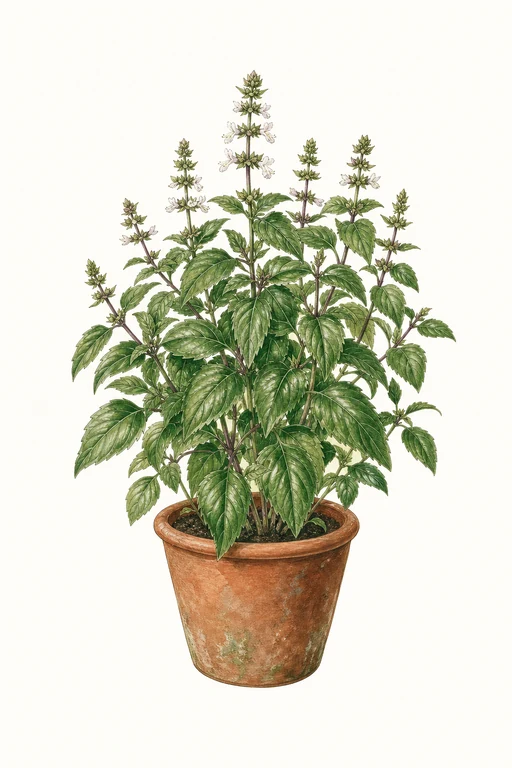
Botanical illustration of Anise Basil
🌱 60d to harvest Upright

Aromatic as a summer breeze, Anise Basil opens with a sweet, licorice-anise fragrance that lingers on the fingertips—then follows…

Planting Schedule

Add Anise Basil to your garden to build a schedule and get reminders.

Crop Dates

MilestoneDate
Start IndoorsMar 27th
Last FrostMay 8th
Transplant / Sow OutdoorsJul 3rd
Harvest BeginsSep 1st
Harvest EndsSep 30th

Crop Details

TraitValue
Days to Maturity60
Sun RequirementsFull SunFull sun
Growth HabitUpright
Support NeededNone
Planting DepthNormal
Germination Temp (°F)70
Min Soil Temp (°F)60
Min Night Temp (°F)50
Harden Off (days)10

Frequently Asked Questions


How do I prevent and treat downy mildew on anise basil?
Anise basil (Ocimum basilicum ‘Anise’) is prone to downy mildew, which shows as pale yellow patches on the upper leaves and a gray-purple growth on the undersides. Remove and discard infected leaves early, improve airflow with wider plant spacing, and water only at the soil line (not on foliage). If it keeps spreading, treat with a labeled downy-mildew fungicide and repeat according to the label, focusing on leaf undersides.
How often should I water anise basil during peak growth?
During the main growing phase, keep the top 1 inch of soil consistently moist but not soggy—typically about 1–2 inches of water per week depending on heat and wind. Water deeply in the morning, letting excess water drain so the root zone doesn’t stay wet overnight. If leaves wilt by midday and feel dry 1 inch down, increase frequency slightly; if the soil stays wet or plants look stunted, cut back.
When is anise basil ready to harvest?
Start harvesting around 60 days when plants are well branched and have several mature sets of leaves, usually after they reach about 8–12 inches tall. Pick when leaves are fully sized and fragrant—snip the top 2–6 inches of stems or pinch leaf pairs, leaving enough foliage for regrowth. For best flavor, harvest before flowering; once flower buds form, leaves become more bitter and aroma shifts.
Botanical illustration of Anise Basil

Aromatic as a summer breeze, Anise Basil opens with a sweet, licorice-anise fragrance that lingers on the fingertips—then follows with a bright, gently peppery basil flavor. Its leaves are lush and tender, forming an upright, bushy mound with a velvety texture that’s especially prized for fresh bouquets of flavor. Grow Anise Basil for standout use in herb-forward dishes, fragrant sauces, and aromatic garnishes where its distinctive anise note can shine.

Sowing Tips

Transplant Conditions

Wait until soil reaches 60°F and nights stay above 50°F before moving outdoors. Harden off for 10 days first.

Expert Note

Start indoors warm and transplant only after nights are reliably warm; Anise/Persian basil quickly suffers in cool weather and will lag.