SproutSmart
SproutSmart Intelligent Garden Sowing

Capture

Cabbage
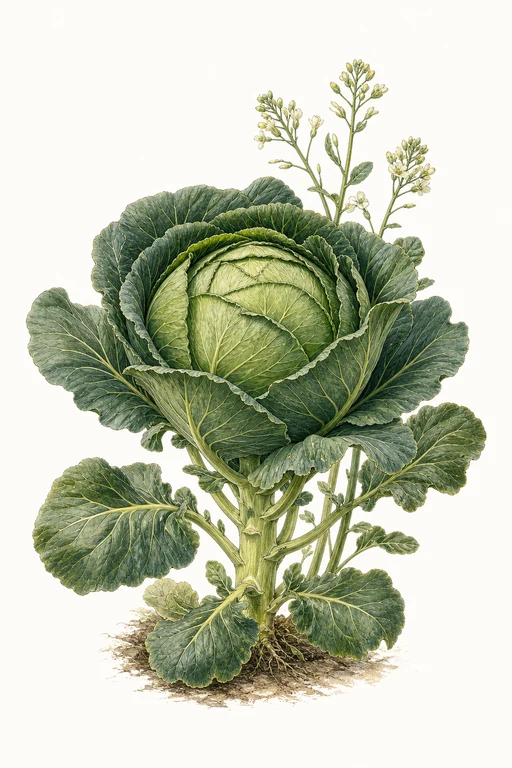
Botanical illustration of Capture
🌱 75d to harvest Rosette

Sweetly crisp and richly green, Capture cabbage forms dense, tightly layered heads with a satisfying crunch that holds its charac…

Planting Schedule

Add Capture to your garden to build a schedule and get reminders.

Crop Dates

MilestoneDate
Start IndoorsApr 10th
Last FrostMay 8th
Transplant / Sow OutdoorsMay 8th
Harvest BeginsJul 22nd
Harvest EndsSep 30th

Crop Details

TraitValue
Days to Maturity75
Sun RequirementsFull SunFull sun
Growth HabitRosette
Support NeededNone
Planting DepthNormal
Germination Temp (°F)45
Min Soil Temp (°F)40
Min Night Temp (°F)32
Harden Off (days)6

Frequently Asked Questions


Why are my cabbage (Brassica oleracea var. capitata) leaves turning yellow or developing fuzzy gray patches, and what should I do?
Yellowing and gray, fuzzy growth are common signs of fungal issues like downy mildew or gray mold, often triggered by cool, damp weather and tight plant spacing. Remove and discard affected outer leaves immediately, improve airflow by thinning so heads aren’t crowded, and water at the soil line (not on the leaves). If the problem spreads, use an appropriate labeled fungicide for brassicas and follow the label’s interval before harvest.
How often should I water cabbage during head formation, and what soil moisture level is best?
During head formation (roughly mid-season to the final weeks before harvest), keep the soil consistently moist but not soggy—aim for about 1–1.5 inches of water per week depending on rainfall. Water deeply so moisture reaches the root zone, then let the top inch of soil dry slightly before watering again. In cabbage, uneven moisture can lead to loose heads and splitting, so avoid letting the soil swing between very dry and very wet.
How can I tell when my cabbage (Brassica oleracea var. capitata) is ready to harvest?
Harvest when the head feels firm and fully formed, with leaves tightly packed and no longer noticeably “springy.” Use the days-to-maturity (about 75 days) as a guide, but rely on firmness and size—heads that are still soft or easily compressed should stay in the bed longer. Cut the head cleanly at the base in the morning for the best crispness.
Botanical illustration of Capture

Sweetly crisp and richly green, Capture cabbage forms dense, tightly layered heads with a satisfying crunch that holds its character from garden to storage. The flavor is clean and gently sweet, with a tender bite that shines in hearty salads and robust braises, and it also performs beautifully for tangy fermented preparations. Grow Capture for a dependable, uniform harvest at about 75 days—an elegant centerpiece in the row and a reliable staple on the plate.

Sowing Tips

Transplant Conditions

Wait until soil reaches 40°F and nights stay above 32°F before moving outdoors. Harden off for 6 days first.

Expert Note

Start cabbage a little earlier than last frost, then transplant only when nights are staying consistently above freezing to prevent slow growth and doubled up heads.