
Clove Basil
Basil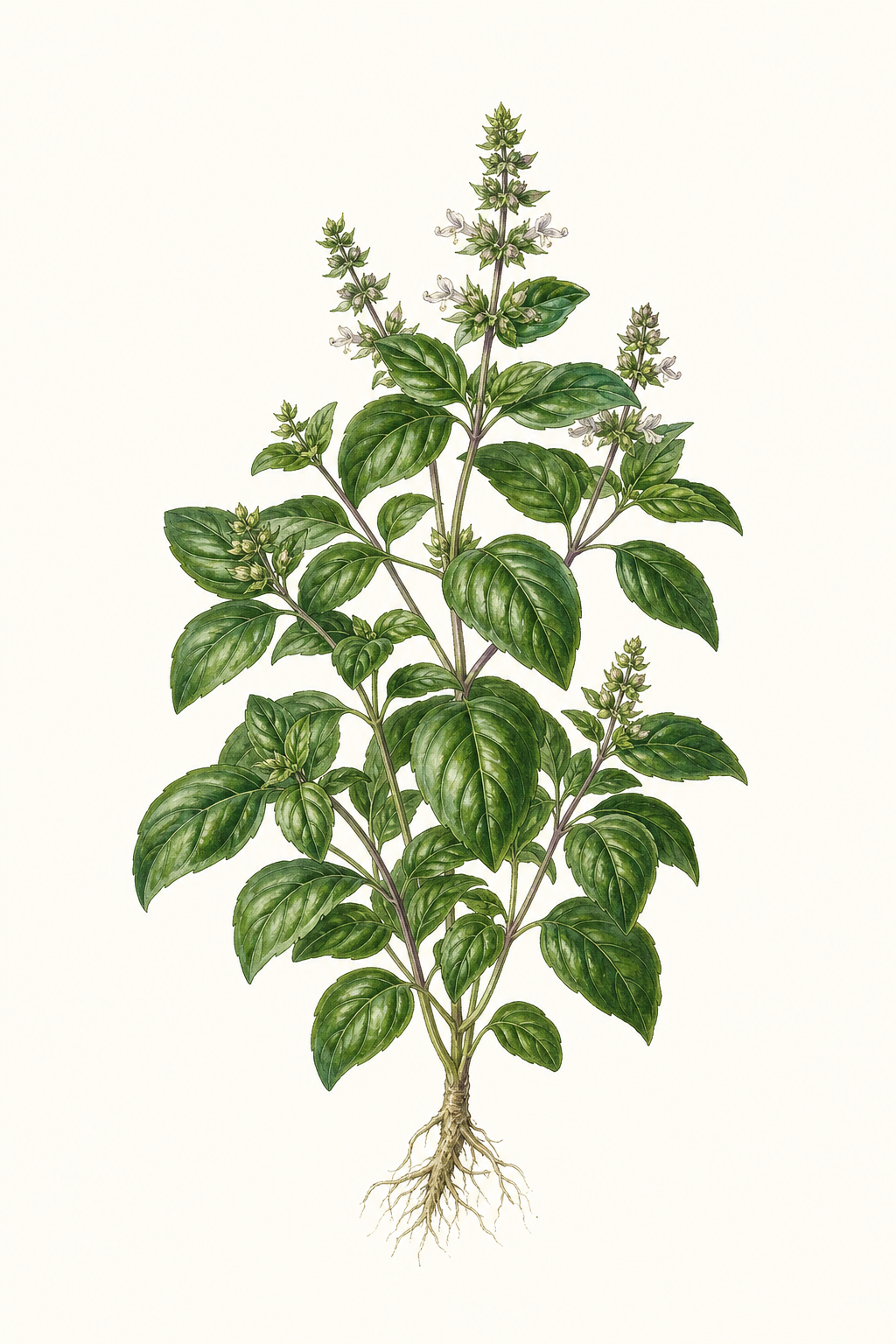
Aromatic and unmistakably bold, Clove Basil releases a warm clove-like fragrance the moment you brush its leaves—sweet, spicy, an…
Crop Dates
| Milestone | Date |
|---|---|
| Start Indoors | Mar 27th |
| Last Frost | May 8th |
| Transplant / Sow Outdoors | Jun 26th |
| Harvest Begins | Aug 25th |
| Harvest Ends | Sep 30th |
Crop Details
| Trait | Value |
|---|---|
| Days to Maturity | 60 |
| Sun Requirements | Full Sun |
| Growth Habit | Shrub |
| Support Needed | None |
| Planting Depth | Normal |
| Germination Temp (°F) | 70 |
| Min Soil Temp (°F) | 60 |
| Min Night Temp (°F) | 50 |
| Harden Off (days) | 10 |
Recommended Companions
Frequently Asked Questions
What pest or disease commonly affects Ocimum gratissimum (clove basil), and how do I control it?
How often should I water Ocimum gratissimum during active growth, and what soil moisture should I maintain?
How can I tell when clove basil (Ocimum gratissimum) is ready to harvest?
Aromatic and unmistakably bold, Clove Basil releases a warm clove-like fragrance the moment you brush its leaves—sweet, spicy, and deeply fragrant. The foliage is tender and lush with a smooth, slightly glossy texture, forming an upright, well-branched plant that’s as beautiful as it is flavorful. Grow Clove Basil for standout fresh use and for fragrant finishing in sauces, infused oils, and vinegar—its distinctive aroma shines whether you’re garnishing or steeping.
Sowing Tips

Transplant Conditions
Wait until soil reaches 60°F and nights stay above 50°F before moving outdoors. Harden off for 10 days first.
Expert Note

Start clove basil indoors for a head start, then transplant only when nights are reliably warm (and keep soil consistently moist until it establishes).