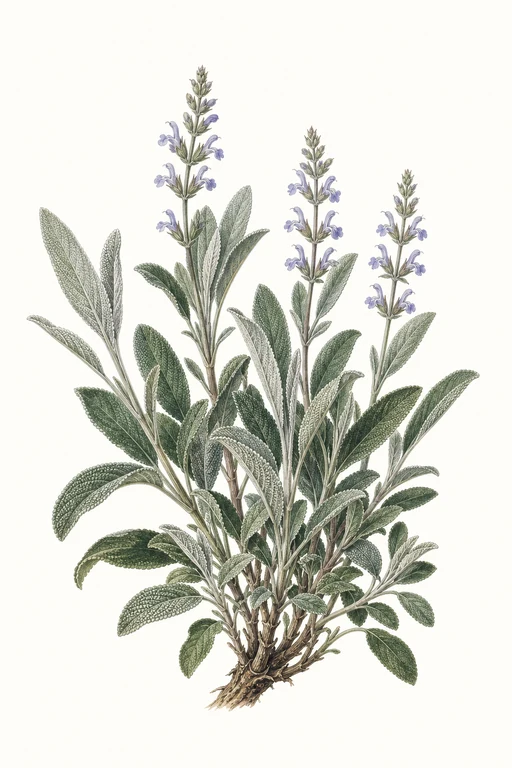
Common Sage
Sage
🌱 70d to harvest
Upright
Velvety, silvery-gray leaves unfurl with a cool, resinous perfume—earthy yet bright, like a green breeze over warm stone. Common …
Crop Dates
| Milestone | Date |
|---|---|
| Start Indoors | Mar 27th |
| Last Frost | May 8th |
| Transplant / Sow Outdoors | May 22nd |
| Harvest Begins | Jul 31st |
| Harvest Ends | Sep 30th |
Crop Details
| Trait | Value |
|---|---|
| Days to Maturity | 70 |
| Sun Requirements | Full Sun |
| Growth Habit | Upright |
| Support Needed | None |
| Planting Depth | Normal |
| Germination Temp (°F) | 70 |
| Min Soil Temp (°F) | 45 |
| Min Night Temp (°F) | 40 |
| Harden Off (days) | 7 |
Recommended Companions
Frequently Asked Questions
Why are my Salvia officinalis leaves turning black or getting powdery, and what should I do?
Powdery mildew on Salvia officinalis shows up as a white, dusty coating on leaves and often appears during humid spells. Improve airflow by spacing plants and avoid wetting foliage, then remove heavily affected leaves; for persistent outbreaks, use a labeled fungicide suitable for edible herbs and follow label timing. If leaves are turning black and collapsing with a soggy crown, it’s likely crown/root rot—cut back watering immediately and ensure the soil drains quickly (raised beds or added gritty compost helps).
How often should I water Salvia officinalis during active growth?
During the main growing phase, water deeply only when the top 1–2 inches of soil feel dry, because garden sage (Salvia officinalis) prefers evenly dry conditions. Aim for about once per week in warm weather, but reduce frequency if your soil stays damp—consistent overwatering can lead to crown and root rot. Water at the soil line and stop once plants are established and actively growing are slowing in cooler weather.
How can I tell when my Salvia officinalis is ready to harvest (about 70 days)?
Harvest when plants have reached vigorous leafy growth—typically around 70 days from sowing under good conditions—with shoots that are at least several inches long and leaves fully expanded (not tiny new growth). For best flavor, pick in the morning and snip just above a leaf pair to encourage branching; a light first harvest is better early, then heavier cut-backs once plants are robust.