SproutSmart
SproutSmart Intelligent Garden Sowing

Creeping

Thyme
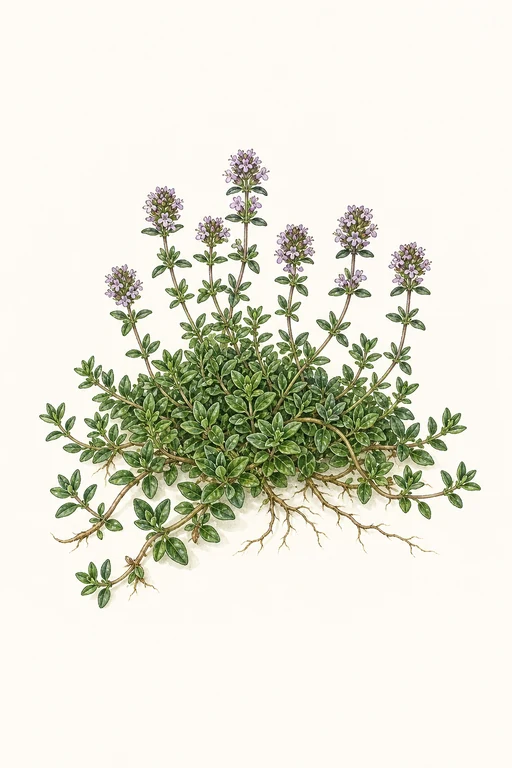
Botanical illustration of Creeping
🌱 60d to harvest Spreading

Creeping thyme drapes with a fragrant, mossy carpet—its tiny leaves release a bright, herbal perfume at the slightest touch. At m…

Planting Schedule

Add Creeping to your garden to build a schedule and get reminders.

Crop Dates

MilestoneDate
Start IndoorsDirect Sow
Last FrostMay 8th
Transplant / Sow OutdoorsMay 8th
Harvest BeginsJul 7th
Harvest EndsSep 30th

Crop Details

TraitValue
Days to Maturity60
Sun RequirementsFull SunFull sun
Growth HabitSpreading
Support NeededNone
Planting DepthSurface
Germination Temp (°F)65
Min Soil Temp (°F)45
Min Night Temp (°F)40
Harden Off (days)7

Frequently Asked Questions


What pest or disease most commonly affects creeping thyme (Thymus serpyllum), and how can I prevent it?
Creeping thyme commonly suffers from root rot when the soil stays wet, often showing as wilting plus blackened roots and a patchy die-back. Let the bed dry slightly between waterings and plant in gritty, fast-draining soil; if rot appears, pull out affected plugs and improve drainage rather than trying to “save” them with extra watering. Keep airflow by not over-thickening the mat, especially in humid weather.
How often should I water creeping thyme during its main growing phase?
During active growth (after establishment), water only when the top 1–2 cm of soil feels dry, usually about once every 7–14 days depending on heat and soil drainage. Aim to wet the root zone thoroughly, but avoid frequent light watering that keeps the surface constantly damp. Once the mat is established, reduce watering further because Thymus serpyllum is drought-tolerant and performs best with drier conditions.
How do I tell when creeping thyme (Thymus serpyllum) is ready to harvest?
Harvest at about 60 days from sowing when the plants form a dense, low mat with lots of small leaves and active new growth. Snip stems in the morning when oils are strongest, taking no more than one-third of the growth at a time to keep the mat dense. If you’re harvesting for flavor, do a first harvest just before or as flowers start to open for the best balance of aroma.
Botanical illustration of Creeping

Creeping thyme drapes with a fragrant, mossy carpet—its tiny leaves release a bright, herbal perfume at the slightest touch. At maturity, the foliage forms a low, spreading mat with a fine, velvety texture and a clean, savory flavor that shines in herb-forward blends. Ideal for fresh garnishing and for seasoning roasts, soups, and sauces where its aromatic character can perfume the whole dish.

Sowing Tips

Transplant Conditions

Wait until soil reaches 45°F and nights stay above 40°F before moving outdoors. Harden off for 7 days first.

Expert Note

For fastest establishment, sow on the surface (light helps germination) and keep evenly moist until you see a mat forming, then let it dry down between waterings.