
Italian Pepperoncini
Pepper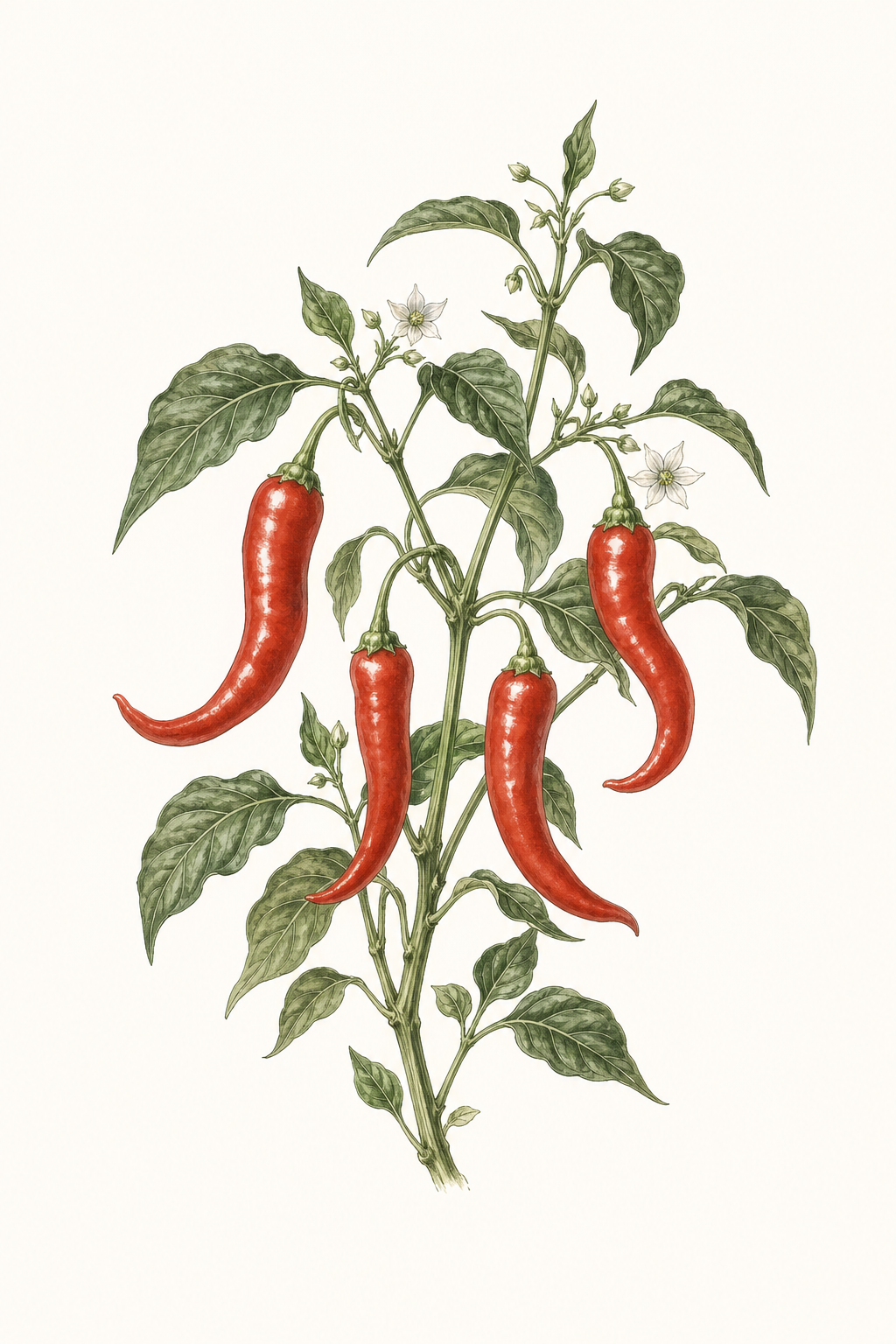
Sweetly fragrant and richly aromatic, Italian Pepperoncini Bull’s Horn peppers ripen to a glossy, warm red with a pleasantly snap…
Crop Dates
| Milestone | Date |
|---|---|
| Start Indoors | Mar 20th |
| Last Frost | May 8th |
| Transplant / Sow Outdoors | Jul 3rd |
| Harvest Begins | Sep 16th |
| Harvest Ends | Sep 30th |
Crop Details
| Trait | Value |
|---|---|
| Days to Maturity | 75 |
| Sun Requirements | Full Sun |
| Growth Habit | Bush |
| Support Needed | Stake |
| Planting Depth | Normal |
| Germination Temp (°F) | 80 |
| Min Soil Temp (°F) | 60 |
| Min Night Temp (°F) | 50 |
| Harden Off (days) | 10 |
Recommended Companions
Frequently Asked Questions
Italian Pepperoncini (Capsicum annuum) — what pest or disease is most likely, and what should I do?
How often should I water Italian Pepperoncini during the main growing phase?
When are Italian Pepperoncini ready to harvest?
Sweetly fragrant and richly aromatic, Italian Pepperoncini Bull’s Horn peppers ripen to a glossy, warm red with a pleasantly snappy bite and a thin, tender wall. Their long, gently curved shape is made for roasting over open flame and for fresh snacking, while their bright heat and peppery depth shine in sauces, pickles, and antipasto-style mixes. Grow them for a steady harvest that turns your garden into a living ribbon of color from green to red.
Sowing Tips

Transplant Conditions
Wait until soil reaches 60°F and nights stay above 50°F before moving outdoors. Harden off for 10 days first.
Expert Note

Start pepperoncini indoors early under steady warmth, then transplant only once soil is reliably warm (about 60°F+) and nights are consistently above ~50°F to avoid cold-stunting.