
Mi Chang Wo
Bottle Gourd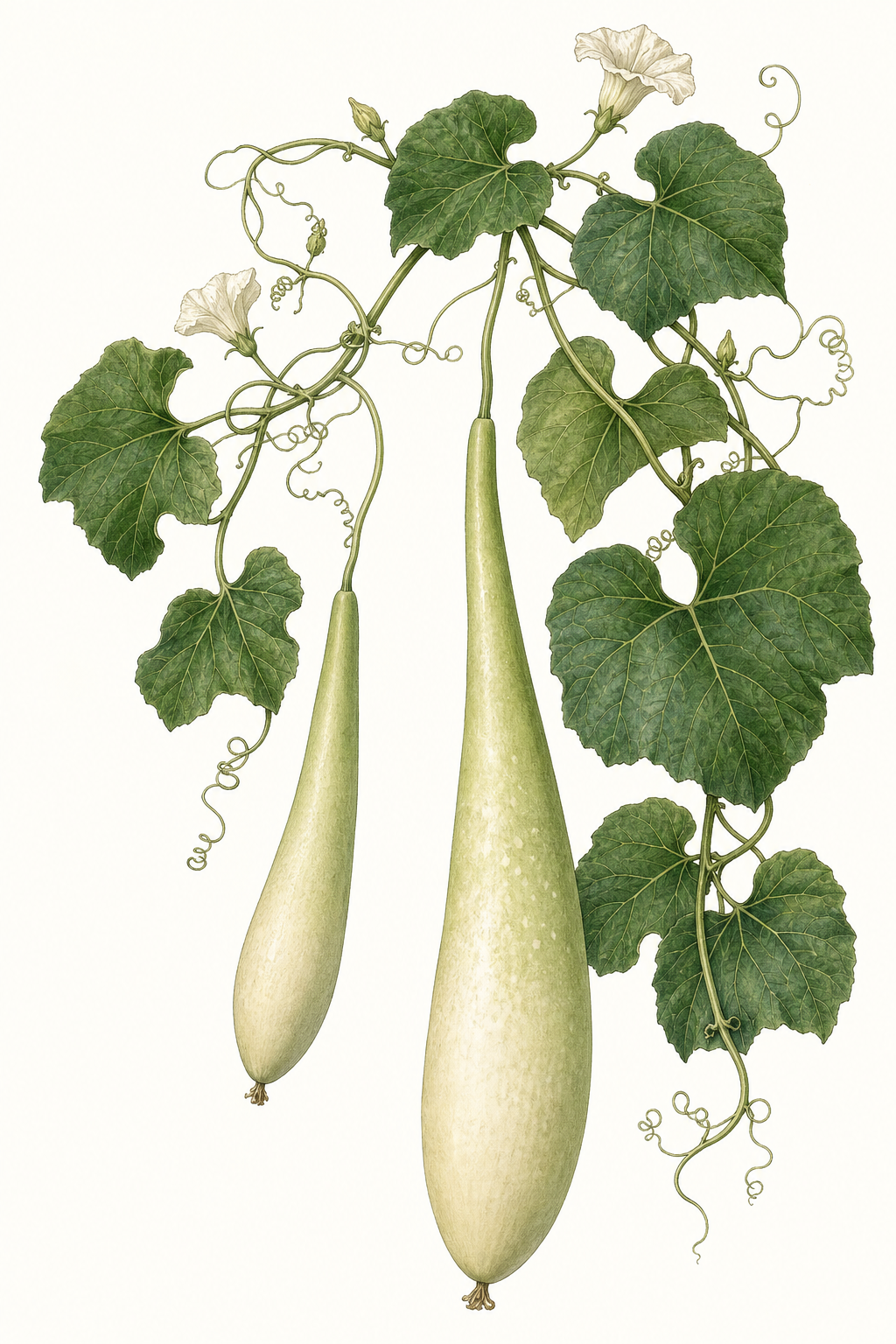
A long, graceful bottle gourd with a cool, pale-green skin that turns softly creamy as it matures—its flesh is crisp and mild, wi…
Crop Dates
| Milestone | Date |
|---|---|
| Start Indoors | May 22nd |
| Last Frost | May 8th |
| Transplant / Sow Outdoors | Jun 5th |
| Harvest Begins | Sep 3rd |
| Harvest Ends | Sep 30th |
Crop Details
| Trait | Value |
|---|---|
| Days to Maturity | 90 |
| Sun Requirements | Full Sun |
| Growth Habit | Vine |
| Support Needed | Trellis |
| Planting Depth | Normal |
| Germination Temp (°F) | 70 |
| Min Soil Temp (°F) | 65 |
| Min Night Temp (°F) | 55 |
| Harden Off (days) | 10 |
Recommended Companions
Frequently Asked Questions
What pests most commonly affect Lagenaria siceraria (snake/gourd type) and how can I control them at home?
How often should I water Lagenaria siceraria during the peak growing period?
How do I tell when Lagenaria siceraria is ready to harvest?
A long, graceful bottle gourd with a cool, pale-green skin that turns softly creamy as it matures—its flesh is crisp and mild, with a clean, watery tenderness that invites slow-roasting warmth and bright fresh use. Mi Chang Wo’s fruits develop a pleasantly firm, sliceable texture that holds its shape beautifully in hearty preparations, while also shining in quick, garden-fresh applications. Grow it for the satisfying arc of a vine that rewards you with elegant, harvest-ready gourds at about 90 days.
Sowing Tips

Transplant Conditions
Wait until soil reaches 65°F and nights stay above 55°F before moving outdoors. Harden off for 10 days first.

Direct Sow Preferred
Sensitive roots — does not transplant well. If starting indoors, use biodegradable pots and disturb roots as little as possible when moving outdoors.
Expert Note

Warm soil and consistent moisture are key—start with sturdy seedlings only when nighttime temps stay warm, then give lots of vine space (bottle gourds are vigorous).