
Pink Chintz Creeping Thyme
Thyme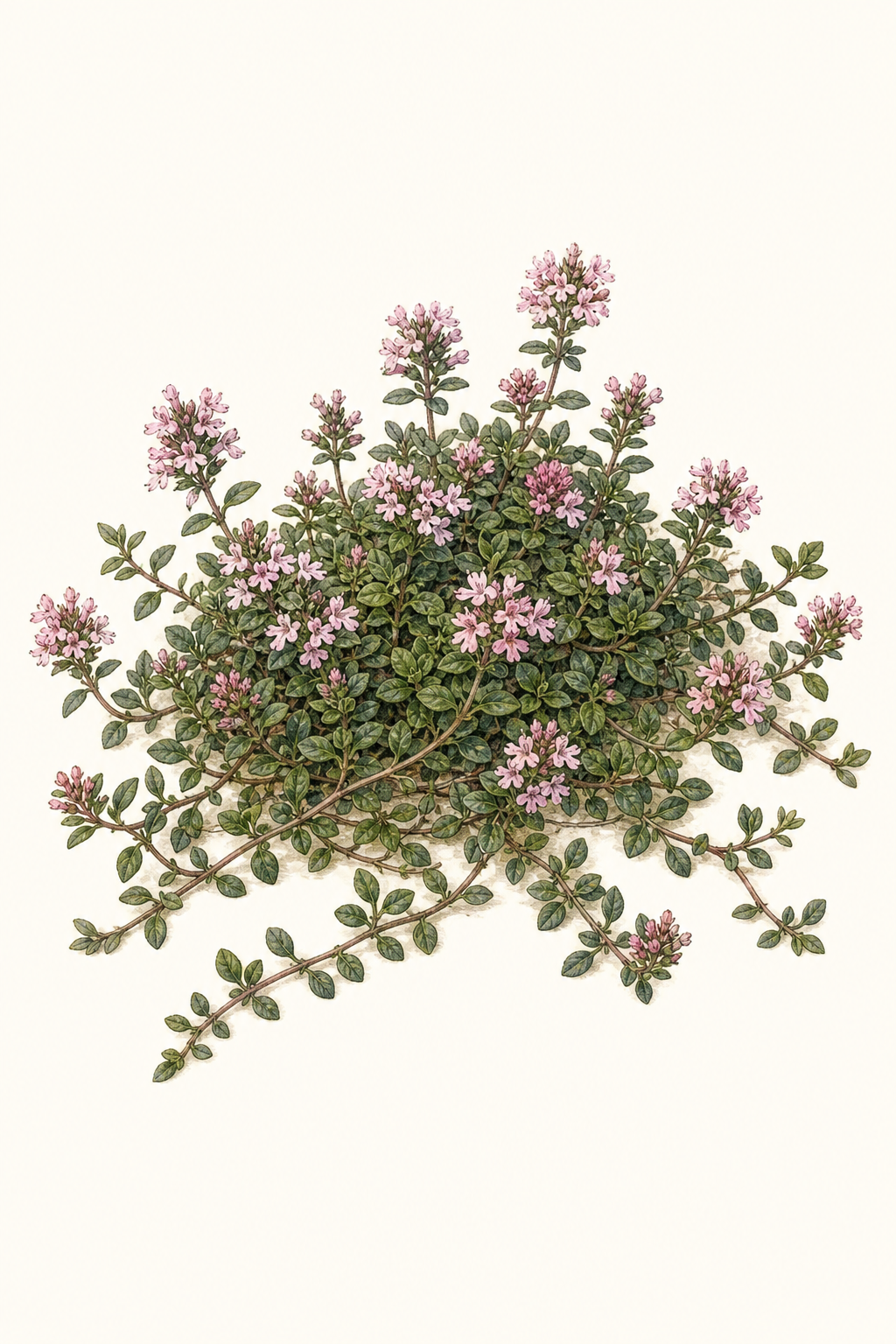
Breathe in the soft, rosy perfume of Pink Chintz Creeping Thyme—an aromatic groundcover that blooms in delicate, blush-pink clust…
Crop Dates
| Milestone | Date |
|---|---|
| Start Indoors | Apr 24th |
| Last Frost | May 8th |
| Transplant / Sow Outdoors | Jun 19th |
| Harvest Begins | Jul 19th |
| Harvest Ends | Sep 30th |
Crop Details
| Trait | Value |
|---|---|
| Days to Maturity | 30 |
| Sun Requirements | Full Sun |
| Growth Habit | Spreading |
| Support Needed | None |
| Planting Depth | Surface |
| Germination Temp (°F) | 65 |
| Min Soil Temp (°F) | 50 |
| Min Night Temp (°F) | 35 |
| Harden Off (days) | 7 |
Recommended Companions
Frequently Asked Questions
What pest or disease issue commonly affects Thymus serpyllum (pink chintz creeping thyme), and what should I do if I see it?
How often should I water Thymus serpyllum during its main growing phase?
How can I tell when Thymus serpyllum (pink chintz creeping thyme) is ready to harvest?
Breathe in the soft, rosy perfume of Pink Chintz Creeping Thyme—an aromatic groundcover that blooms in delicate, blush-pink clusters like tiny blossoms dusted with satin. At maturity, its low, trailing mats form a fine-textured carpet of small, evergreen leaves, releasing a lively, herbaceous fragrance when brushed. Ideal for edging paths, filling sunny borders, and creating a living fragrance patch that looks as charming as it smells.
Sowing Tips

Transplant Conditions
Wait until soil reaches 50°F and nights stay above 35°F before moving outdoors. Harden off for 7 days first.
Expert Note

For the fastest, densest carpet, start plants a little early, keep soil on the drier side, and avoid over-fertilizing to prevent legginess.