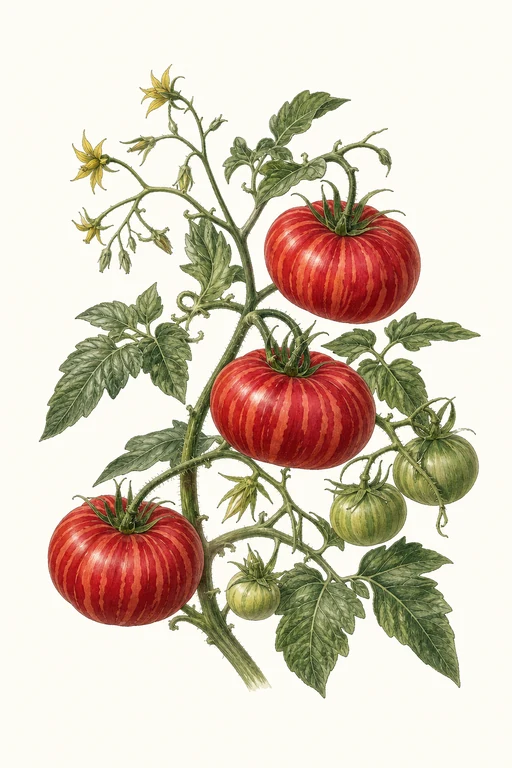
Red Zebra
Tomato
🌱 80d to harvest
Indeterminate
A vivid, zebra-striped blush—crimson bands over a warm, rose-red ground—makes Red Zebra tomatoes as thrilling to look at as they …
Crop Dates
| Milestone | Date |
|---|---|
| Start Indoors | Mar 20th |
| Last Frost | May 8th |
| Transplant / Sow Outdoors | Jul 3rd |
| Harvest Begins | Sep 21st |
| Harvest Ends | Sep 30th |
Crop Details
| Trait | Value |
|---|---|
| Days to Maturity | 80 |
| Sun Requirements | Full Sun |
| Growth Habit | Indeterminate |
| Support Needed | Cage |
| Planting Depth | Deep |
| Germination Temp (°F) | 75 |
| Min Soil Temp (°F) | 60 |
| Min Night Temp (°F) | 50 |
| Harden Off (days) | 10 |
Recommended Companions
Frequently Asked Questions
What disease is most likely on Solanum lycopersicum (Red Zebra) and how can I prevent it?
Tomatoes commonly suffer from early blight (Alternaria), which shows as dark, concentric rings on older leaves and can quickly spread upward. Start by removing and discarding infected leaves, and improve airflow by spacing plants and keeping foliage off the ground with stakes or cages. Water at the soil line (not overhead) and apply a preventive label-rate fungicide if you’ve had blight in past seasons, especially during warm, humid weeks.
How often should I water Red Zebra tomato plants during peak growth?
During flowering and fruiting, keep soil evenly moist—typically about 1 to 1.5 inches (2.5–4 cm) of water per week, adjusted for rain and heat. Water deeply so moisture reaches the root zone, then let the top 1 inch of soil dry slightly before watering again to reduce blossom-end rot and disease. Mulch around the plants to stabilize moisture and avoid the wet–dry swings that can crack fruit.
How do I know when Red Zebra tomatoes are ready to harvest?
Harvest when fruits are fully colored with the classic red-and-yellow striping and are firm but slightly yielding to gentle pressure. Avoid picking too early—striped tomatoes often ripen unevenly, and under-ripe fruit will stay bland. For best flavor, pick after the fruit has reached full size and striping is distinct, then allow any slightly under-colored fruits to finish ripening indoors.