
Candle Fire
Okra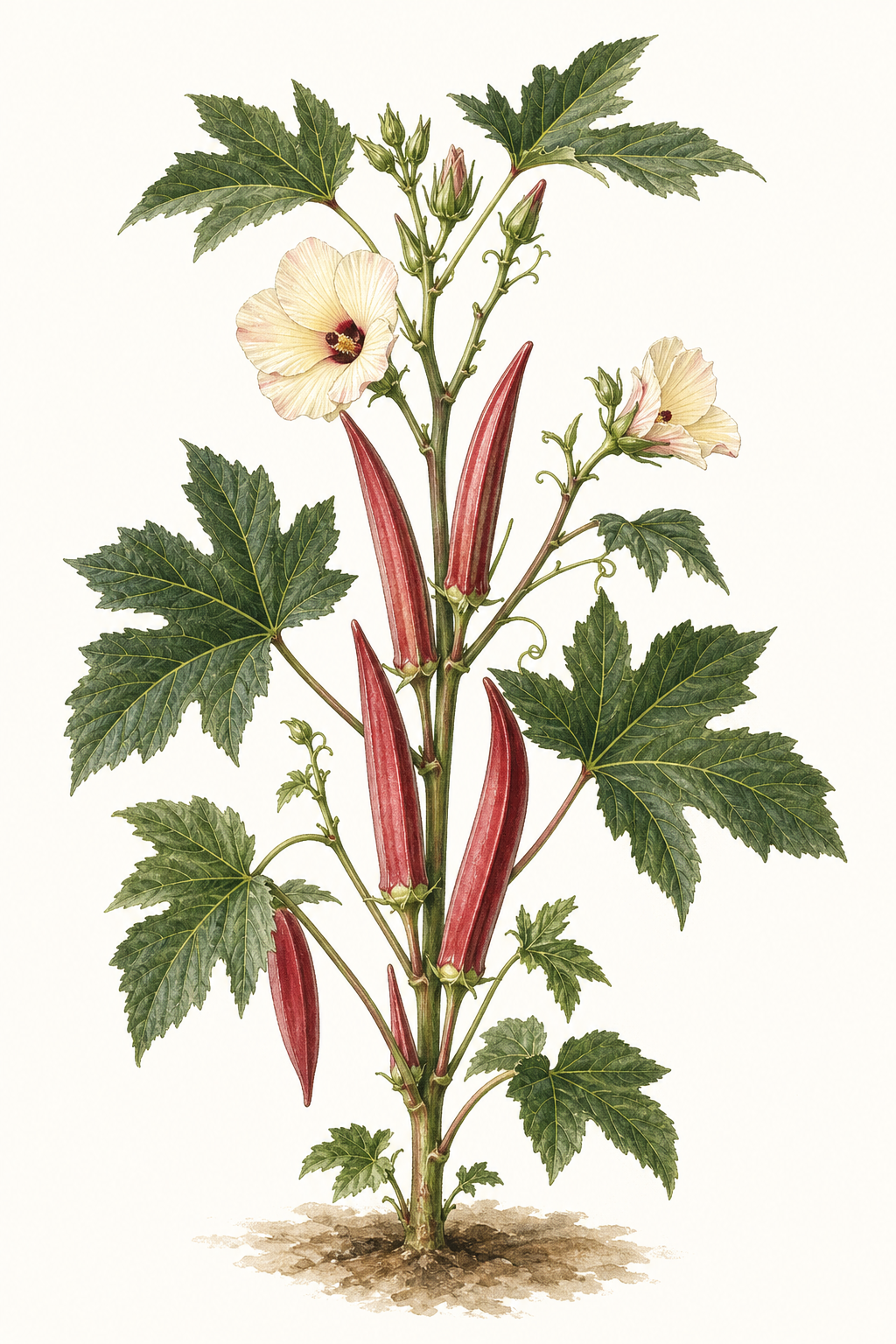
Candle Fire okra brings a vivid, flame-bright presence to the garden—tender pods with a crisp, juicy bite and a subtly sweet, gre…
Crop Dates
| Milestone | Date |
|---|---|
| Start Indoors | Direct Sow |
| Last Frost | May 4th |
| Transplant / Sow Outdoors | Jun 1st |
| Harvest Begins | Jul 26th |
| Harvest Ends | Oct 5th |
Crop Details
| Trait | Value |
|---|---|
| Days to Maturity | 55 |
| Sun Requirements | Full Sun |
| Growth Habit | Upright |
| Support Needed | None |
| Planting Depth | Normal |
| Germination Temp (°F) | 80 |
| Min Soil Temp (°F) | 65 |
| Min Night Temp (°F) | 55 |
| Harden Off (days) | 10 |
Recommended Companions
Frequently Asked Questions
What pest or disease commonly affects Abelmoschus esculentus (okra) and what should I do?
How often should I water okra (Abelmoschus esculentus) during the main growing phase?
How can I tell when okra (Abelmoschus esculentus) is ready to harvest?
Candle Fire okra brings a vivid, flame-bright presence to the garden—tender pods with a crisp, juicy bite and a subtly sweet, green-bean flavor at peak harvest. The pods are slender and upright, holding their clean texture for standout roasting and quick sautéing, while their mild character also shines in rich sauces and hearty stews. Grow this 55-day performer for a long, rewarding harvest window and a striking splash of color from first bloom to the last pod.
Sowing Tips

Transplant Conditions
Wait until soil reaches 65°F and nights stay above 55°F before moving outdoors. Harden off for 10 days first.

Direct Sow Preferred
Sensitive roots — does not transplant well. If starting indoors, use biodegradable pots and disturb roots as little as possible when moving outdoors.
Expert Note

Start Candle Fire indoors early enough to reach transplant size, but delay transplanting until soil is truly warm (60°F+) to avoid cold-stunt.