
Charleston Grey
Watermelon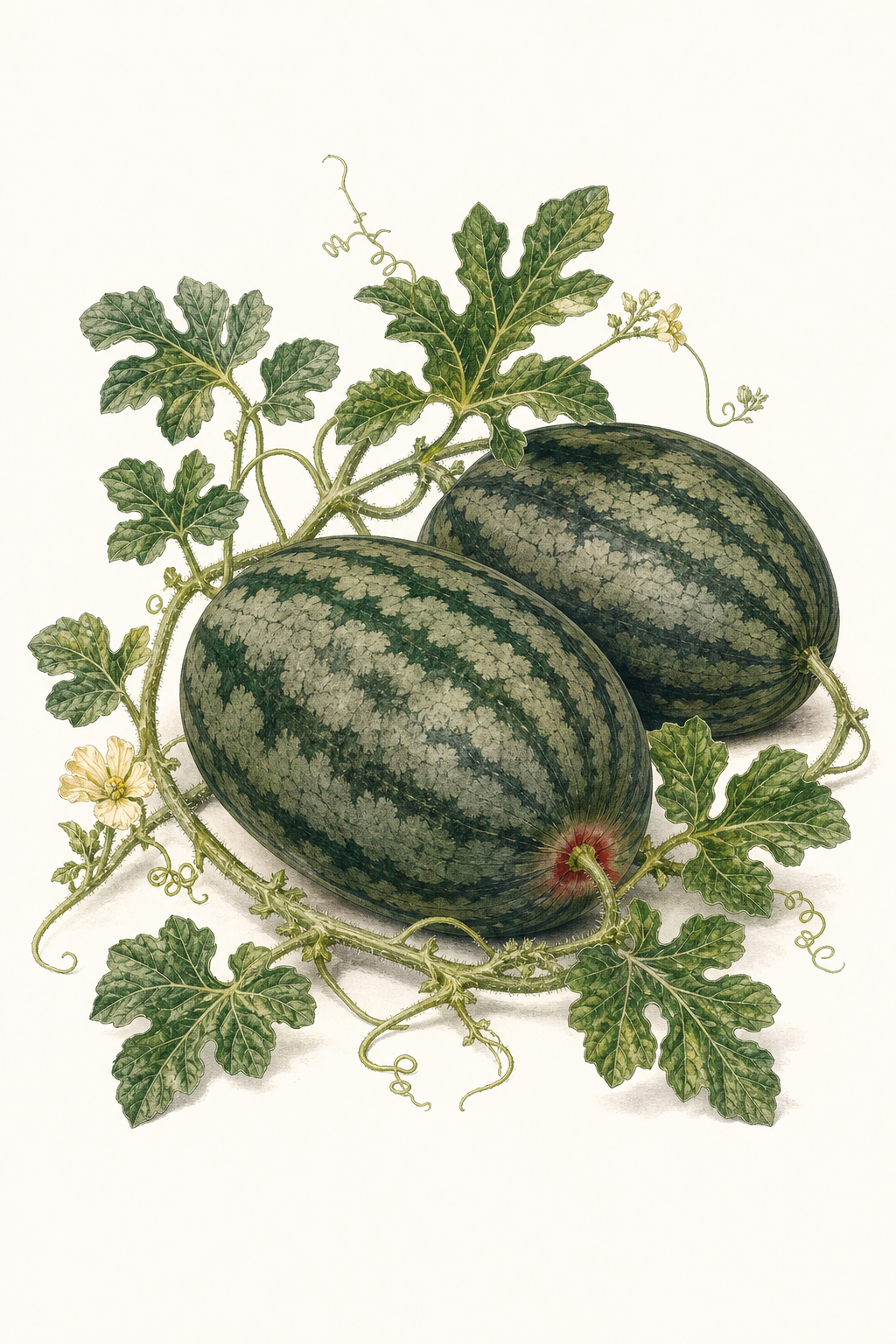
Sink your teeth into Charleston Grey’s sun-warmed sweetness—its flesh is a vivid, blushing red with a crisp, juicy bite that feel…
Crop Dates
| Milestone | Date |
|---|---|
| Start Indoors | May 18th |
| Last Frost | May 4th |
| Transplant / Sow Outdoors | Jun 1st |
| Harvest Begins | Sep 4th |
| Harvest Ends | Oct 5th |
Crop Details
| Trait | Value |
|---|---|
| Days to Maturity | 95 |
| Sun Requirements | Full Sun |
| Growth Habit | Vine |
| Support Needed | Trellis |
| Planting Depth | Normal |
| Germination Temp (°F) | 75 |
| Min Soil Temp (°F) | 70 |
| Min Night Temp (°F) | 55 |
| Harden Off (days) | 10 |
Recommended Companions
Frequently Asked Questions
What’s the most common disease/pest issue for Citrullus lanatus (watermelon) and how do I control it?
How often should I water Charleston Grey watermelon during the main growing phase?
How can I tell when Charleston Grey (Citrullus lanatus) is ready to harvest?
Sink your teeth into Charleston Grey’s sun-warmed sweetness—its flesh is a vivid, blushing red with a crisp, juicy bite that feels cool and refreshing straight from the garden. The rind shows classic picnic-watermelon charm: bold, smoky green striping over a deep gray-green ground, built for satisfying heft and easy slicing. Grow Charleston Grey for backyard gatherings and for showy, slice-ready fruit that turns every warm day into a celebration of color and flavor.
Sowing Tips

Transplant Conditions
Wait until soil reaches 70°F and nights stay above 55°F before moving outdoors. Harden off for 10 days first.

Direct Sow Preferred
Sensitive roots — does not transplant well. If starting indoors, use biodegradable pots and disturb roots as little as possible when moving outdoors.
Expert Note

For best sweetness and fewer issues, warm the soil fully and use black plastic or row cover early to keep soil and nights warm while the vines establish.