
Chicago Warted Hubbard
Winter Squash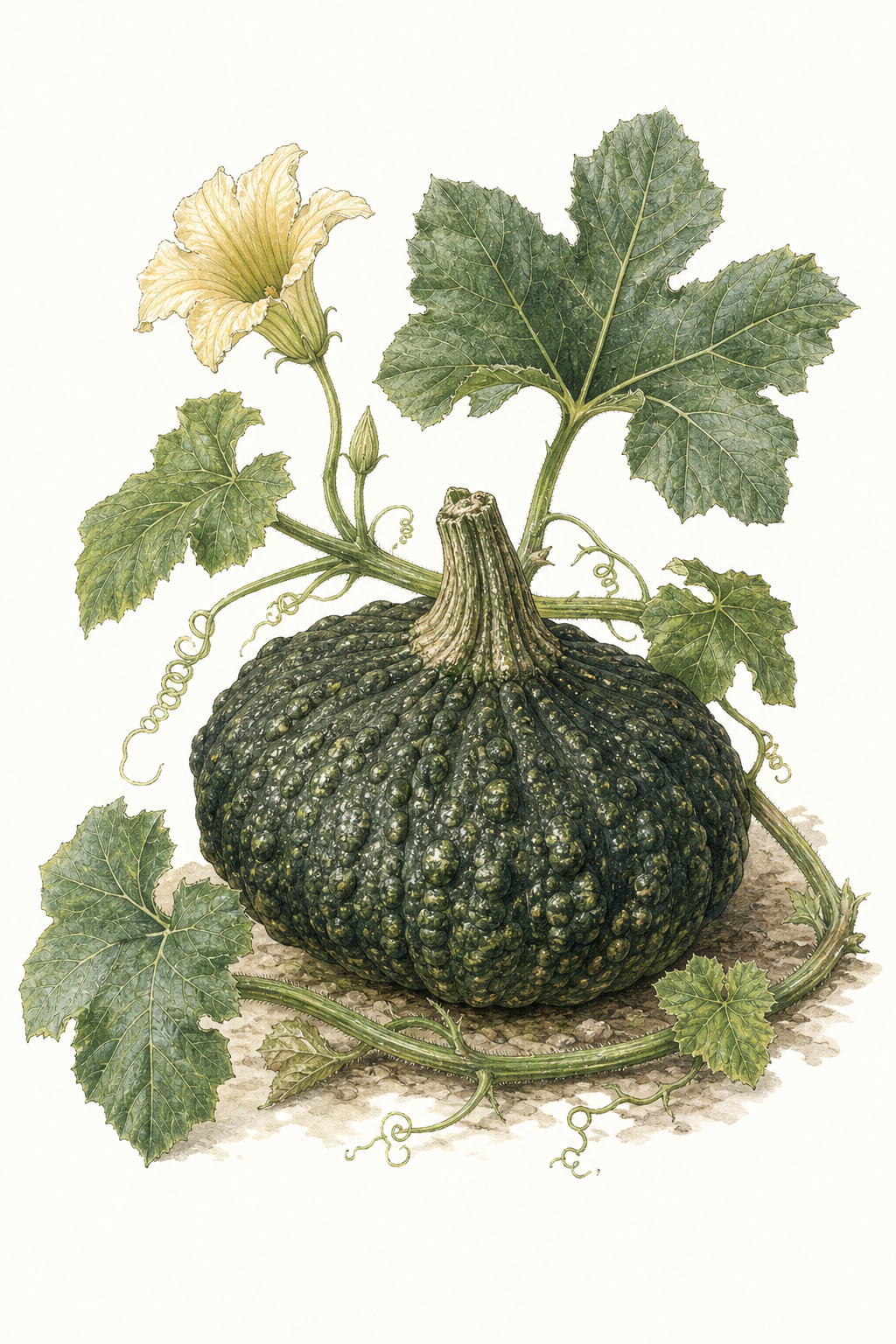
Sink your spoon into Chicago Warted Hubbard’s rich, deep-orange flesh—silky-smooth with a subtly sweet, nutty perfume that linger…
Crop Dates
| Milestone | Date |
|---|---|
| Start Indoors | Direct Sow |
| Last Frost | May 4th |
| Transplant / Sow Outdoors | Jun 1st |
| Harvest Begins | Sep 4th |
| Harvest Ends | Oct 5th |
Crop Details
| Trait | Value |
|---|---|
| Days to Maturity | 95 |
| Sun Requirements | Full Sun |
| Growth Habit | Vine |
| Support Needed | Trellis |
| Planting Depth | Normal |
| Germination Temp (°F) | 85 |
| Min Soil Temp (°F) | 65 |
| Min Night Temp (°F) | 55 |
| Harden Off (days) | 10 |
Recommended Companions
Frequently Asked Questions
What pest or disease is most likely to hit Cucurbita maxima (Chicago Warted Hubbard), and what should I do?
How often should I water Cucurbita maxima during the main growing phase?
How can I tell when Chicago Warted Hubbard squash is ready to harvest?
Sink your spoon into Chicago Warted Hubbard’s rich, deep-orange flesh—silky-smooth with a subtly sweet, nutty perfume that lingers like warm autumn air. The fruit forms a dramatic, heavily warted shell in a deep, mottled green that turns beautifully at maturity, with a dense, spoonable texture prized for hearty winter fare. Grow it for bold, statement squash that stores exceptionally well, turning your pantry into a season-long centerpiece for savory roasts, creamy purées, and robust sauces.
Sowing Tips

Transplant Conditions
Wait until soil reaches 65°F and nights stay above 55°F before moving outdoors. Harden off for 10 days first.

Direct Sow Preferred
Sensitive roots — does not transplant well. If starting indoors, use biodegradable pots and disturb roots as little as possible when moving outdoors.
Expert Note

For Hubbard-type winter squash, start seeds only if your season is short—otherwise direct-sow after soil warms, and protect seedlings from cool nights early on.