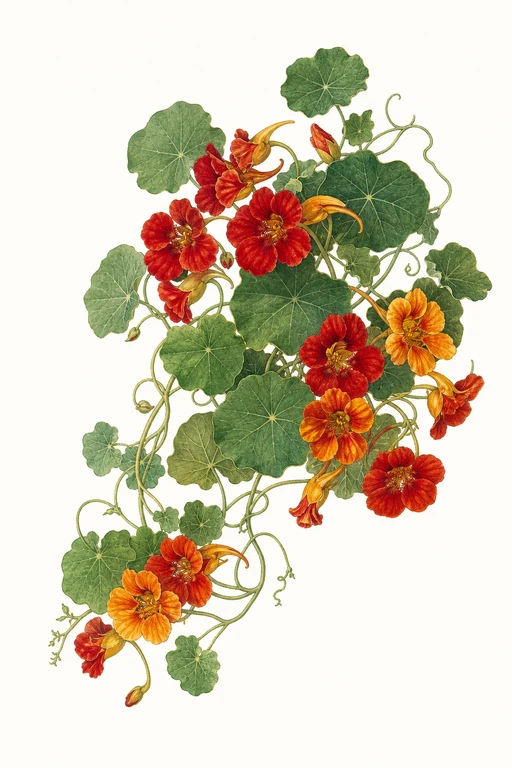
Jewel Of Africa
Nasturtium
🌱 50d to harvest
Vine
A living jewel in the garden—Jewel Of Africa bursts with velvety, saturated blooms that glow like warm garnet against lush foliag…
Crop Dates
| Milestone | Date |
|---|---|
| Start Indoors | Direct Sow |
| Last Frost | May 4th |
| Transplant / Sow Outdoors | May 4th |
| Harvest Begins | Jun 23rd |
| Harvest Ends | Oct 5th |
Crop Details
| Trait | Value |
|---|---|
| Days to Maturity | 50 |
| Sun Requirements | Full Sun |
| Growth Habit | Vine |
| Support Needed | Trellis |
| Planting Depth | Normal |
| Germination Temp (°F) | 70 |
| Min Soil Temp (°F) | 55 |
| Min Night Temp (°F) | 40 |
| Harden Off (days) | Not Required |
Recommended Companions
Frequently Asked Questions
What’s a common disease problem for Tropaeolum majus (Jewel of Africa), and how can I prevent it?
Jewel of Africa commonly suffers from leaf spot and downy mildew in humid weather, often showing as dark spots or fuzzy growth on leaves. Water at the soil line (not overhead) and space plants so leaves dry quickly after rain; remove heavily spotted leaves early to slow spread. If it’s spreading, use a labeled fungicide suitable for ornamental bedding plants and repeat according to label timing.
How often should I water Tropaeolum majus during its main growing phase?
After seedlings establish, keep the soil evenly moist but not soggy—water when the top 1 inch of soil feels dry. In full sun, this usually means about 1–2 deep waterings per week depending on heat and container vs. bed conditions; reduce frequency if the soil stays damp. Avoid letting plants sit in water, since Tropaeolum majus is prone to root issues in overly wet soil.
How do I tell when Tropaeolum majus (Jewel of Africa) is ready to harvest?
Harvest starts when buds form and plants are actively flowering; for best flavor, pick flowers early in the morning before they wilt in heat. If you’re growing mainly for seeds, harvest seed pods once they turn papery and begin to dry on the plant—expect roughly 50 days from sowing to maturity. Remove spent flowers regularly to keep the plant producing new blooms.