SproutSmart
SproutSmart Intelligent Garden Sowing

Piccolino Basil

Basil
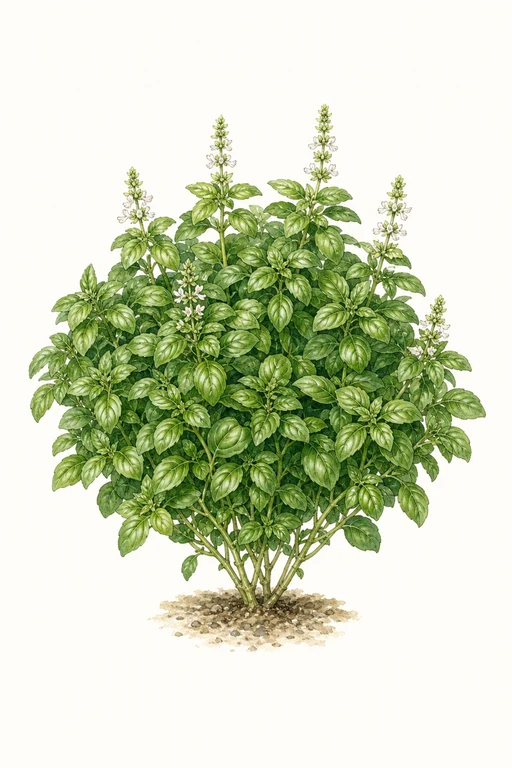
Botanical illustration of Piccolino Basil
🌱 60d to harvest Bush

Fragrant as a warm summer breeze, Piccolino Basil forms a dense, compact mound of small leaves that release a bright, sweet-anise…

Planting Schedule

Add Piccolino Basil to your garden to build a schedule and get reminders.

Crop Dates

MilestoneDate
Start IndoorsMar 30th
Last FrostMay 4th
Transplant / Sow OutdoorsJun 22nd
Harvest BeginsAug 21st
Harvest EndsOct 5th

Crop Details

TraitValue
Days to Maturity60
Sun RequirementsFull SunFull sun
Growth HabitBush
Support NeededNone
Planting DepthNormal
Germination Temp (°F)70
Min Soil Temp (°F)60
Min Night Temp (°F)50
Harden Off (days)10

Frequently Asked Questions


What pest or disease problem is most likely on Ocimum basilicum (Piccolino basil), and what should I do?
Basil (Ocimum basilicum) commonly gets downy mildew, which shows as yellow patches on the upper leaf surface with a gray-purple growth underside. Improve airflow (space plants, avoid crowding) and water at the soil line so foliage stays dry; remove and discard infected leaves immediately. If it keeps spreading, use a labeled fungicide for basil downy mildew and repeat per the label schedule.
How often should I water Piccolino basil during its main growing phase?
During the main growth period (about weeks 3–8), keep the soil consistently lightly moist—water when the top 1 inch feels dry. Basil in full sun dries quickly, so check daily in warm weather and water deeply to wet the root zone rather than frequent light sprinkles. Avoid waterlogged soil, which can encourage root stress and disease—ensure pots/drains or beds are well drained.
How can I tell when Ocimum basilicum (Piccolino basil) is ready to harvest?
Harvest at about 60 days when plants are well-leafed and have sturdy stems, typically once they have several sets of true leaves. Pick in the morning and take the top 2–4 inches by snipping just above a leaf pair to trigger branching. Continue harvesting regularly; leaves should be firm and fragrant, and you should avoid letting plants flower if you want maximum tender leaf production.
Botanical illustration of Piccolino Basil

Fragrant as a warm summer breeze, Piccolino Basil forms a dense, compact mound of small leaves that release a bright, sweet-anise lift with every touch. The foliage is tender and finely textured—succulent enough for fresh use, yet substantial for drying or bundling—so your harvest stays lush and aromatic. Grow Piccolino Basil for bold leaf flavor in sauces, finishing oils, and herb-forward garnishes, or to brighten salads and quick tosses with its signature perfume.

Sowing Tips

Transplant Conditions

Wait until soil reaches 60°F and nights stay above 50°F before moving outdoors. Harden off for 10 days first.

Expert Note

Start basil indoors for earlier harvest, but transplant only after nights stay consistently warm and acclimate seedlings for 7–10 days to avoid chilling.