SproutSmart
SproutSmart Intelligent Garden Sowing

Rat's Tail

Radish
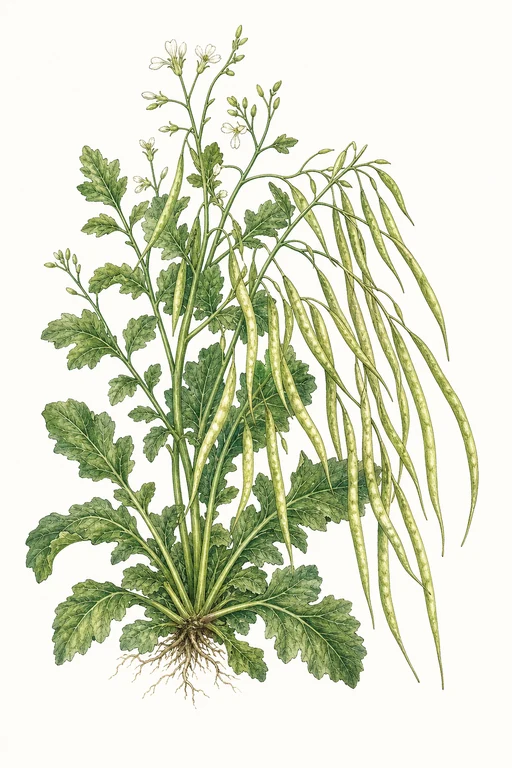
Botanical illustration of Rat's Tail
🌱 45d to harvest Upright

A cascade of tender, pea-green pods—so vivid they seem to glow—hangs from vigorous stems in a long, elegant “rat’s tail” line. Ra…

Planting Schedule

Add Rat's Tail to your garden to build a schedule and get reminders.

Crop Dates

MilestoneDate
Start IndoorsDirect Sow
Last FrostMay 4th
Transplant / Sow OutdoorsMay 4th
Harvest BeginsJun 18th
Harvest EndsOct 5th

Crop Details

TraitValue
Days to Maturity45
Sun RequirementsFull SunFull sun
Growth HabitUpright
Support NeededNone
Planting DepthSurface
Germination Temp (°F)55
Min Soil Temp (°F)40
Min Night Temp (°F)28
Harden Off (days)Not Required

Frequently Asked Questions


How do I prevent and treat common problems like flea beetles on Raphanus sativus (rat’s tail radish)?
Flea beetles commonly chew small shot-holes in rat’s tail radish leaves, reducing growth before pods form. Use a fine insect net or row cover once plants are up, and keep the bed weed-free; if damage starts, treat promptly with an insecticidal soap or a labeled pyrethrin product following label directions. Avoid letting plants get stressed (especially from dry soil), since stressed plants are more heavily attacked.
How often should I water rat’s tail radish (Raphanus sativus) during the main pod-forming phase?
During active pod/flower-stalk growth (roughly weeks 3–6), keep the soil evenly moist but not soggy—about 1 inch of water per week, split into 1–2 waterings as needed. If the top 1 inch of soil dries out completely between waterings, the pods can turn tougher and less tender; water deeply to re-wet the root zone. Mulch lightly to reduce moisture swings, which helps maintain tender, fast-growing pods.
What signs tell me rat’s tail radish (Raphanus sativus) is ready to harvest?
Harvest when the long, slender seed pods (the “rat’s tail” parts) are fully formed but still crisp and tender—typically around 45 days from sowing. Pods should feel firm yet not woody, and the seeds inside should be small and developing rather than hard. If you see the pods getting thick, tough, or overly dry, pull them promptly to keep eating quality.
Botanical illustration of Rat's Tail

A cascade of tender, pea-green pods—so vivid they seem to glow—hangs from vigorous stems in a long, elegant “rat’s tail” line. Rat’s Tail radish delivers a crisp, juicy bite with a pleasantly peppery lift, prized for snacking straight from the garden and for quick pickling to capture its fresh, bright character. Grow it for its edible pods as much as its compact roots, and enjoy a continuous harvest window that keeps the plants looking lush and ornamental.

Sowing Tips

Transplant Conditions

Wait until soil reaches 40°F and nights stay above 28°F before moving outdoors.

Expert Note

Sow frequently in succession because Rat’s Tail radish pods form best when plants don’t get heat-stressed—harvest seed pods young and tender.