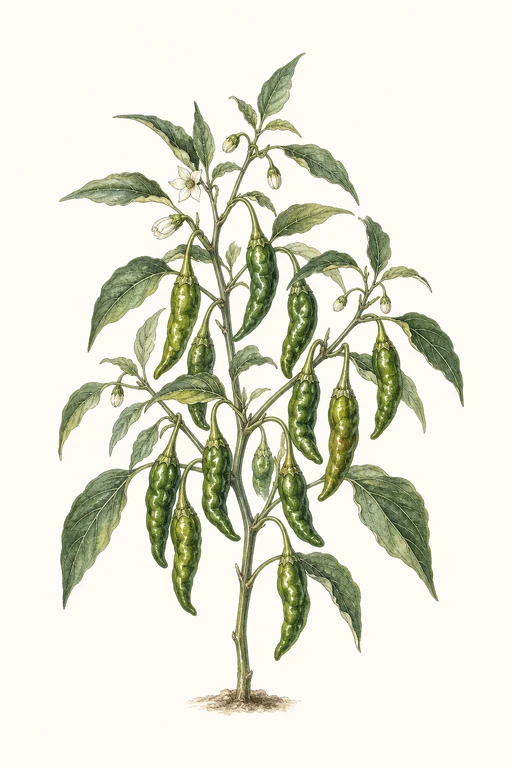
Shishito
Pepper
🌱 70d to harvest
Upright
Sweetly grassy at first, Shishito peppers bloom into a gentle, lively heat that lingers like a warm ember—never harsh, always inv…
Crop Dates
| Milestone | Date |
|---|---|
| Start Indoors | Mar 9th |
| Last Frost | May 4th |
| Transplant / Sow Outdoors | Jun 29th |
| Harvest Begins | Sep 7th |
| Harvest Ends | Oct 5th |
Crop Details
| Trait | Value |
|---|---|
| Days to Maturity | 70 |
| Sun Requirements | Full Sun |
| Growth Habit | Upright |
| Support Needed | Stake |
| Planting Depth | Normal |
| Germination Temp (°F) | 80 |
| Min Soil Temp (°F) | 60 |
| Min Night Temp (°F) | 50 |
| Harden Off (days) | 10 |
Recommended Companions
Frequently Asked Questions
What pest or disease is most likely on Capsicum annuum (shishito), and how do I control it?
Watch for aphids and flea beetles on young shishito plants; they can stunt growth and leave pitted leaves. Rinse aphids off with a strong spray of water and apply insecticidal soap if they return, and use row cover until plants flower to reduce flea beetle damage. If you see gray mold/brown spotting, improve airflow and avoid wetting foliage when watering; remove affected leaves promptly to slow spread.
How often should I water shishito during the main growing phase (after transplanting/establishment)?
Water so the top 1–2 inches of soil dry slightly between waterings, then water deeply until the root zone is evenly moist. In hot weather this often means about 1–3 times per week depending on soil and container size, but the key trigger is that surface drying—not the calendar—controls frequency. Consistent moisture helps prevent blossom drop and the “woody” bite that can come from irregular drying and rewetting.
How can I tell when shishito peppers are ready to harvest?
Harvest when pods are firm, glossy, and reach about 3–5 inches long with a deep green color (typically starting around day 70, sometimes sooner depending on conditions). Pick frequently—every few days—because shishitos often keep producing once harvesting begins. If you wait for them to fully ripen to red, you’ll reduce ongoing yield and shift toward sweeter but less prolific picking.