
Spanish Roja
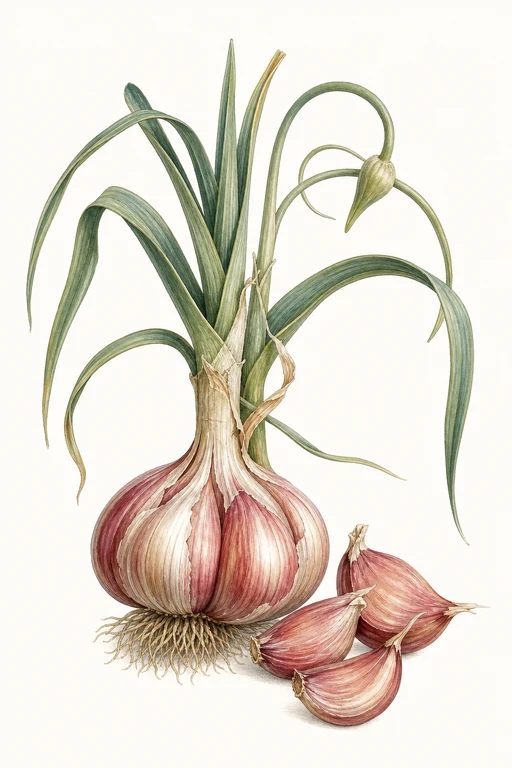
Rich, papery cloves with a bold, rosy-red blush—Spanish Roja hardneck garlic delivers a deeply savory aroma that lingers like roasted earth and sweet spice. Expect medium-to-large bulbs with easy-to-peel skins, creamy-tender texture when cooked, and a balanced bite that shines in sauces, roasts, and slow-simmered favorites. Grow Spanish Roja for dependable performance and striking color that makes every harvest feel like a small treasure.
Crop Dates
| Milestone | Date |
|---|---|
| Last Frost | May 4th |
| Growing Approach | Protected Environment Only |
Crop Details
| Trait | Value |
|---|---|
| Days to Maturity | 240 |
| Sun Requirements | Full Sun |
| Growth Habit | Upright |
| Support Needed | None |
| Planting Depth | Normal |
| Germination Temp (°F) | 50 |
| Min Soil Temp (°F) | 40 |
| Min Night Temp (°F) | 28 |
| Harden Off (days) | Not Required |
Recommended Companions


Frequently Asked Questions
What’s the most common disease issue for Spanish Roja garlic (Allium sativum var. ophioscorodon), and how do I stop it?
How often should I water Spanish Roja garlic during the main growing phase?
Rich, papery cloves with a bold, rosy-red blush—Spanish Roja hardneck garlic delivers a deeply savory aroma that lingers like roasted earth and sweet spice. Expect medium-to-large bulbs with easy-to-peel skins, creamy-tender texture when cooked, and a balanced bite that shines in sauces, roasts, and slow-simmered favorites. Grow Spanish Roja for dependable performance and striking color that makes every harvest feel like a small treasure.
Sowing Tips

Soil Temperature
Direct sow or transplant when soil at planting depth holds 40°F for reliable germination and early growth.
Expert Note

Plant hardneck garlic in fall so it establishes a strong root system before winter, then vernalizes for a spring harvest.