
Sessantina Grossa
Cabbage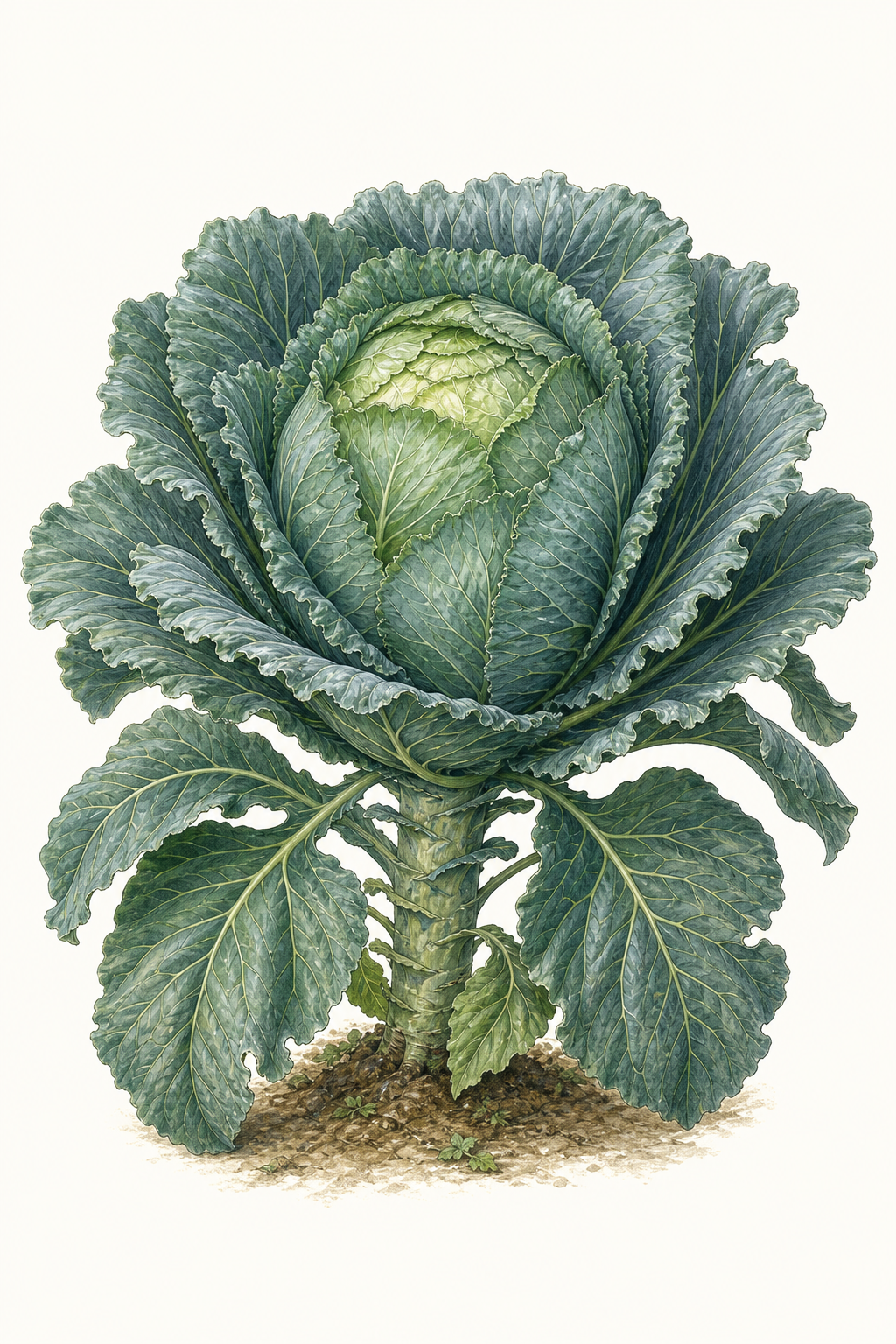
Crisp, cool-sweet leaves unfurl to form a dense, generous head with a satisfying crunch at first bite—Sessantina Grossa is all ab…
Crop Dates
| Milestone | Date |
|---|---|
| Start Indoors | Mar 28th |
| Last Frost | Apr 25th |
| Transplant / Sow Outdoors | Apr 25th |
| Harvest Begins | Jun 19th |
| Harvest Ends | Oct 16th |
Crop Details
| Trait | Value |
|---|---|
| Days to Maturity | 55 |
| Sun Requirements | Full Sun |
| Growth Habit | Rosette |
| Support Needed | None |
| Planting Depth | Normal |
| Germination Temp (°F) | 45 |
| Min Soil Temp (°F) | 40 |
| Min Night Temp (°F) | 32 |
| Harden Off (days) | 6 |
Recommended Companions
Frequently Asked Questions
What pest or disease is most common on Brassica oleracea var. capitata (cabbage) and how can I control it?
How often should I water during the main growing phase to grow firm heads of Brassica oleracea var. capitata?
How do I tell when Sessantina Grossa cabbage (Brassica oleracea var. capitata) is ready to harvest?
Crisp, cool-sweet leaves unfurl to form a dense, generous head with a satisfying crunch at first bite—Sessantina Grossa is all about that satisfying, garden-fresh snap. The outer foliage is richly blue-green, while the interior gathers into a pale, creamy heart that stays tender and uniform. Ideal for fresh salads, slaws, and quick sautés, this 55-day cabbage shines whenever you want a bold cabbage flavor with a clean, crisp texture.
Sowing Tips

Transplant Conditions
Wait until soil reaches 40°F and nights stay above 32°F before moving outdoors. Harden off for 6 days first.
Expert Note

For the best peppery-sweet flavor, grow rapini in cool weather and avoid hot spells by aiming to transplant just before the mild-warm window after your last spring frost.