SproutSmart
SproutSmart Intelligent Garden Sowing

Resistafly

Carrot
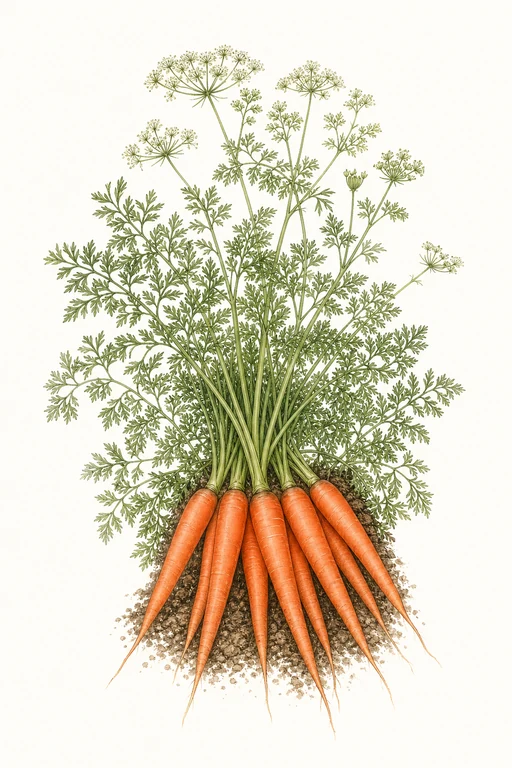
Botanical illustration of Resistafly
🌱 75d to harvest Taproot

Sweet, crisp, and vividly tender—Resistafly Nantes Carrot delivers a clean, honeyed flavor with a fine-grained bite that stays pl…

Planting Schedule

Add Resistafly to your garden to build a schedule and get reminders.

Crop Dates

MilestoneDate
Start IndoorsDirect Sow
Last FrostApr 25th
Transplant / Sow OutdoorsApr 25th
Harvest BeginsJul 9th
Harvest EndsOct 16th

Crop Details

TraitValue
Days to Maturity75
Sun RequirementsFull SunFull sun
Growth HabitTaproot
Support NeededNone
Planting DepthNormal
Germination Temp (°F)75
Min Soil Temp (°F)45
Min Night Temp (°F)28
Harden Off (days)Not Required

Frequently Asked Questions


What pest or disease commonly affects carrots (Daucus carota) and how can I control it in a home garden?
Carrots commonly get Alternaria leaf blight, especially in warm, humid weather, starting as small brown spots on the foliage that spread over time. Remove and discard infected tops, avoid overhead watering, and improve airflow by thinning seedlings to proper spacing. If it keeps progressing, treat with a labeled organic fungicide according to the product label and rotate beds to a non-Apiaceae crop the next season.
How often should I water carrots during the main growing phase, and what soil moisture level do they need?
Keep the top 2–3 in. of soil consistently moist once seeds germinate, typically watering 1–2 times per week depending on heat and soil type. Aim for steady moisture—dry spells can cause rough, cracked roots, while overly wet beds can slow growth and increase disease on leaves. Water deeply enough to reach where the roots are actively expanding, then let the surface slightly dry before the next watering.
How do I tell when Resistafly carrots are ready to harvest?
Start checking at about 70–75 days from sowing: the tops should show a shoulder above the soil and the roots should reach your desired diameter (often around 1/2–1 in. for home use). Loosen the soil around a few plants with a fork and pull one to confirm size—if they feel slender, wait a few more days. Harvest promptly once they hit size, because staying too long can make roots woody or less sweet.
Botanical illustration of Resistafly

Sweet, crisp, and vividly tender—Resistafly Nantes Carrot delivers a clean, honeyed flavor with a fine-grained bite that stays pleasantly snappy. At maturity, the roots form classic Nantes proportions: smooth, slender-shouldered cylinders with a bright orange core and a neat, uniform finish that’s especially satisfying for fresh use and quick flavoring in everyday recipes. Grow Resistafly for a reliable 75-day season and a harvest that looks as good as it tastes, whether you’re enjoying them straight from the garden or turning them into vibrant sauces and pickles.

Sowing Tips

Transplant Conditions

Wait until soil reaches 45°F and nights stay above 28°F before moving outdoors.

Expert Note

Sow Nantes-type carrot seed directly in cool weather and keep the bed covered with carrot-mesh or fine netting to block carrot fly egg-laying.