
Ancho Gigantea
Poblano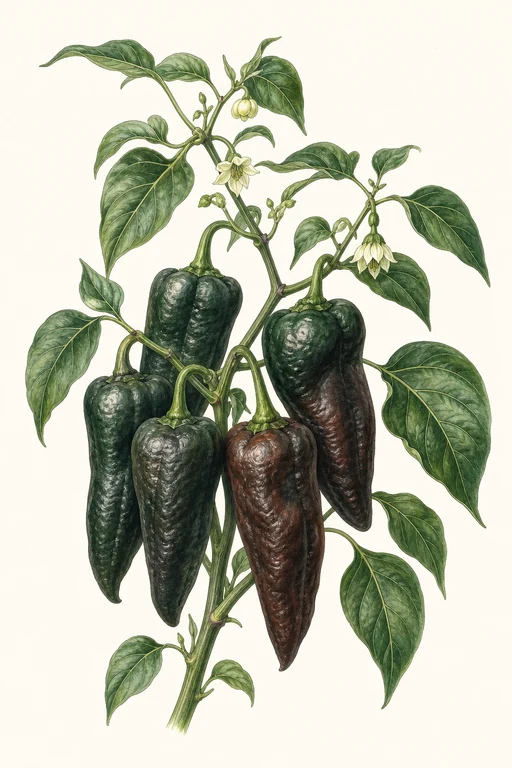
Slow to mature and richly rewarding, Ancho Gigantea Poblano brings a deep, earthy warmth with a smoky, dried-pepper character tha…
Crop Dates
| Milestone | Date |
|---|---|
| Start Indoors | Feb 13th |
| Last Frost | Apr 10th |
| Transplant / Sow Outdoors | Jun 5th |
| Harvest Begins | Aug 24th |
| Harvest Ends | Oct 28th |
Crop Details
| Trait | Value |
|---|---|
| Days to Maturity | 80 |
| Sun Requirements | Full Sun |
| Growth Habit | Bush |
| Support Needed | Stake |
| Planting Depth | Normal |
| Germination Temp (°F) | 80 |
| Min Soil Temp (°F) | 60 |
| Min Night Temp (°F) | 50 |
| Harden Off (days) | 10 |
Recommended Companions


Frequently Asked Questions
What’s a common problem for Capsicum annuum (ancho poblano) and how do I treat it?
How often should I water ancho poblano peppers during the main growing phase?
How can I tell when an ancho (Capsicum annuum) is ready to harvest?
Slow to mature and richly rewarding, Ancho Gigantea Poblano brings a deep, earthy warmth with a smoky, dried-pepper character that lingers on the palate. At maturity, the pods develop a broad, gently tapered shape with a velvety, medium-thick skin—flexible and substantial, ideal for turning into bold sauces and chile-forward dishes. Grow it for its distinctive, roasted-style flavor profile and its satisfying, meaty bite that shines in salsas, braises, and chile pastes.
Sowing Tips

Transplant Conditions
Wait until soil reaches 60°F and nights stay above 50°F before moving outdoors. Harden off for 10 days first.
Expert Note

Start peppers early indoors and transplant only when soil is consistently warm (60°F+), since cold-soil slowdowns can stall growth even if air temps look fine.