
Big Bertha
Bell Pepper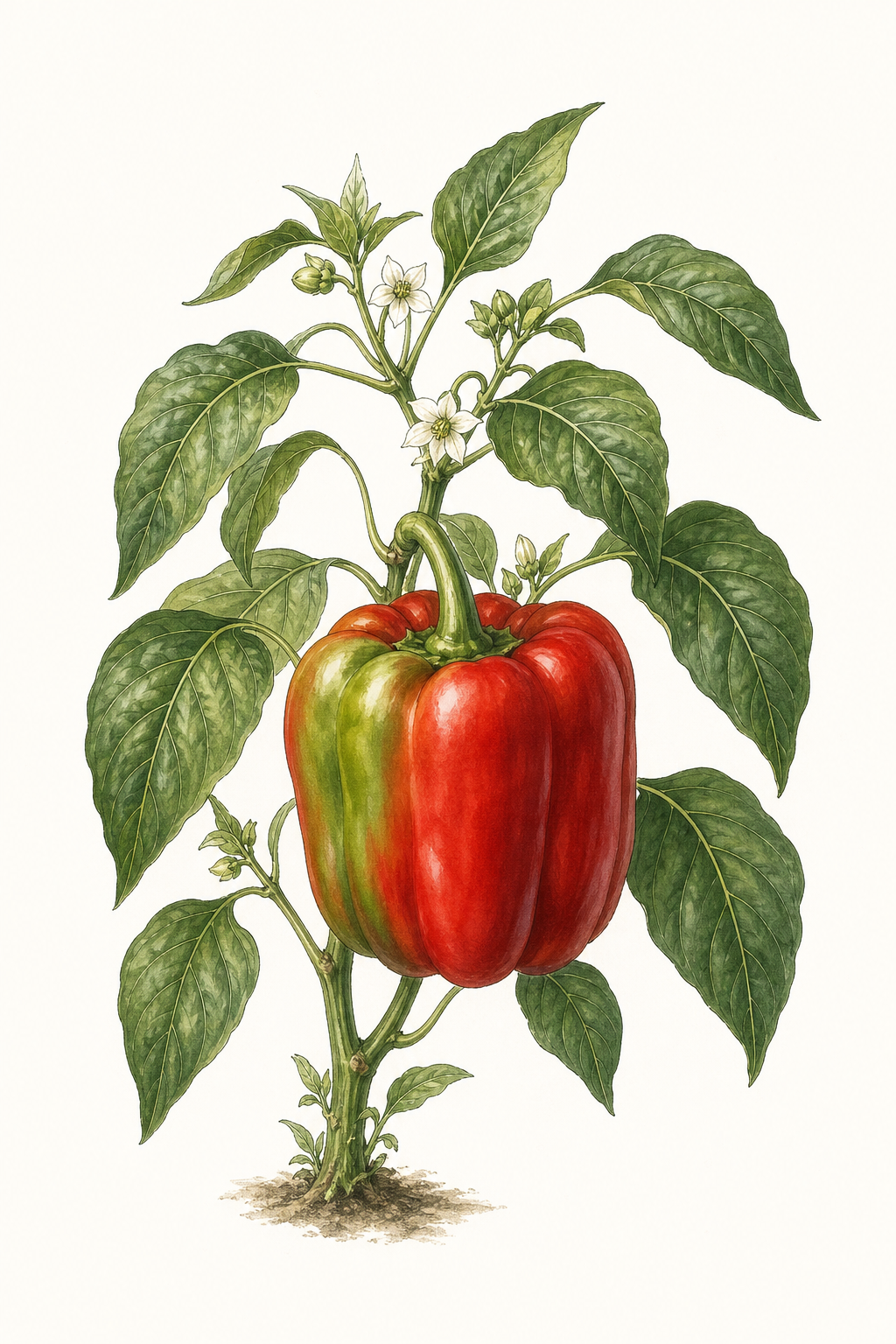
Sweet, thick-walled bells of Big Bertha arrive with a lush, glossy crunch—first in a bright green flush, then deepening to a rich…
Crop Dates
| Milestone | Date |
|---|---|
| Start Indoors | Feb 13th |
| Last Frost | Apr 10th |
| Transplant / Sow Outdoors | Jun 5th |
| Harvest Begins | Aug 29th |
| Harvest Ends | Oct 28th |
Crop Details
| Trait | Value |
|---|---|
| Days to Maturity | 85 |
| Sun Requirements | Full Sun |
| Growth Habit | Bush |
| Support Needed | Stake |
| Planting Depth | Normal |
| Germination Temp (°F) | 80 |
| Min Soil Temp (°F) | 60 |
| Min Night Temp (°F) | 50 |
| Harden Off (days) | 10 |
Recommended Companions
Frequently Asked Questions
What should I do if my Big Bertha tomatoes get early blight?
How often should I water Big Bertha during the main growing phase (after it flowers)?
How can I tell when Big Bertha tomatoes are ready to harvest?
Sweet, thick-walled bells of Big Bertha arrive with a lush, glossy crunch—first in a bright green flush, then deepening to a rich, fully ripe red that tastes as smooth as it looks. The fruit holds a substantial, blocky shape with crisp flesh and excellent firmness, making it a standout for roasting, grilling, and stuffing, as well as for fresh slicing and vibrant sauces. Grow Big Bertha for dependable, generous harvests that bring bold color and satisfying texture to every bed.
Sowing Tips

Transplant Conditions
Wait until soil reaches 60°F and nights stay above 50°F before moving outdoors. Harden off for 10 days first.
Expert Note

For extra-large sweet peppers, wait to transplant until the soil is consistently warm (around 60–70°F) and keep watering steady after transplanting to prevent blossom drop.