SproutSmart
SproutSmart Intelligent Garden Sowing

Miyashige

Radish
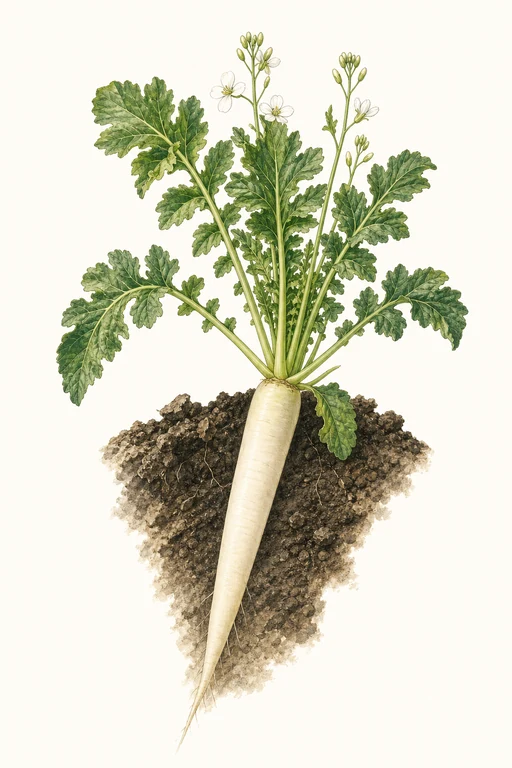
Botanical illustration of Miyashige
🌱 60d to harvest Taproot

Sink your senses into Miyashige’s crisp, cool snap—an elegant daikon with a clean, mildly sweet radish character and a refreshing…

Planting Schedule

Add Miyashige to your garden to build a schedule and get reminders.

Crop Dates

MilestoneDate
Start IndoorsDirect Sow
Last FrostApr 10th
Transplant / Sow OutdoorsApr 10th
Harvest BeginsJun 9th
Harvest EndsOct 28th

Crop Details

TraitValue
Days to Maturity60
Sun RequirementsFull SunFull sun
Growth HabitTaproot
Support NeededNone
Planting DepthNormal
Germination Temp (°F)55
Min Soil Temp (°F)45
Min Night Temp (°F)28
Harden Off (days)Not Required

Frequently Asked Questions


What pest or disease problem commonly affects Raphanus sativus (radish), and how can I manage it?
Radish commonly suffers from flea beetles (small, jumping holes in leaves) which can stunt roots, especially in warm weather. Cover seedlings with a row cover immediately after sowing, and if needed use insecticidal soap on a dry morning, reapplying every few days while beetles are active. If you see leaf spots with yellowing, remove affected leaves promptly and avoid overhead watering to reduce spread.
How often should I water Raphanus sativus during the main growing phase?
During the main root-forming period (roughly weeks 2–6 after sowing), keep the soil consistently evenly moist, not waterlogged. Water deeply about 1–2 times per week depending on weather, aiming for a damp (not soggy) seedbed and avoiding letting the top layer dry out completely, which can cause splitting and pithy roots. Mulch lightly to steady moisture, and reduce watering as roots reach full size to prevent cracking.
How do I tell when Miyashige radish (Raphanus sativus) is ready to harvest?
Harvest at about 60 days from sowing, but use the root diameter as the real trigger: pull when the shoulders are well-filled and sized for your preference. Look for the radish root to appear above the soil line with a firm, crisp texture—if it gets soft or woody, it has likely passed its ideal window. For the best quality, harvest in the morning and refrigerate promptly.
Botanical illustration of Miyashige

Sink your senses into Miyashige’s crisp, cool snap—an elegant daikon with a clean, mildly sweet radish character and a refreshing, juicy bite. At maturity, its long roots develop a smooth, ivory skin and a tender, fine-grained texture that stays pleasantly crisp from harvest onward. Miyashige shines in fresh preparations and shines just as brightly when grated or sliced for bold, bright sauces and quick pickles that benefit from its gentle flavor.