
Russian Banana
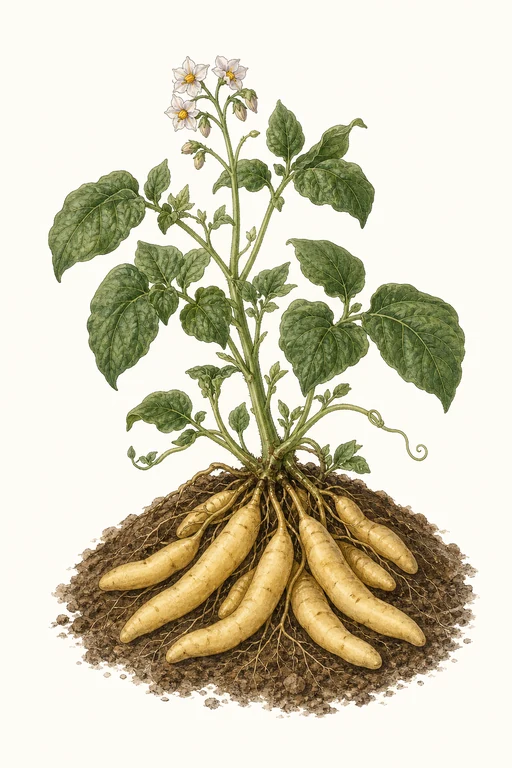
Creamy and luminous, Russian Banana fingerlings unfurl from the soil in buttery, oblong “bananas” with a smooth, thin skin and a tender, fine-grained bite. Their flavor is rich yet delicate—ideal for showcasing in simple, high-heat preparations where their shape stays elegant and their interiors turn velvety. Grow them for roasting trays, pan-searing, and standout side dishes, or for mashing into silky sauces with a gentle, potato-sweet depth.
Crop Dates
| Milestone | Date |
|---|---|
| Start Indoors | Direct Sow |
| Last Frost | Apr 10th |
| Transplant / Sow Outdoors | Apr 10th |
| Harvest Begins | Jun 29th |
| Harvest Ends | Oct 28th |
Crop Details
| Trait | Value |
|---|---|
| Days to Maturity | 80 |
| Sun Requirements | Full Sun |
| Growth Habit | Spreading |
| Support Needed | None |
| Planting Depth | Normal |
| Germination Temp (°F) | 55 |
| Min Soil Temp (°F) | 45 |
| Min Night Temp (°F) | 35 |
| Harden Off (days) | Not Required |
Recommended Companions

Frequently Asked Questions
What pest or disease is most likely on Solanum tuberosum (potato) and how do I control it at home?
How often should I water Russian Banana potatoes during the main growing phase?
Creamy and luminous, Russian Banana fingerlings unfurl from the soil in buttery, oblong “bananas” with a smooth, thin skin and a tender, fine-grained bite. Their flavor is rich yet delicate—ideal for showcasing in simple, high-heat preparations where their shape stays elegant and their interiors turn velvety. Grow them for roasting trays, pan-searing, and standout side dishes, or for mashing into silky sauces with a gentle, potato-sweet depth.
Sowing Tips

Transplant Conditions
Wait until soil reaches 45°F and nights stay above 35°F before moving outdoors.
Expert Note

Plant certified seed potatoes (or properly cured cut tubers) 2–3 in deep when soil is cool and handle sprouting tubers gently to protect eyes.