
Tricolor Sage
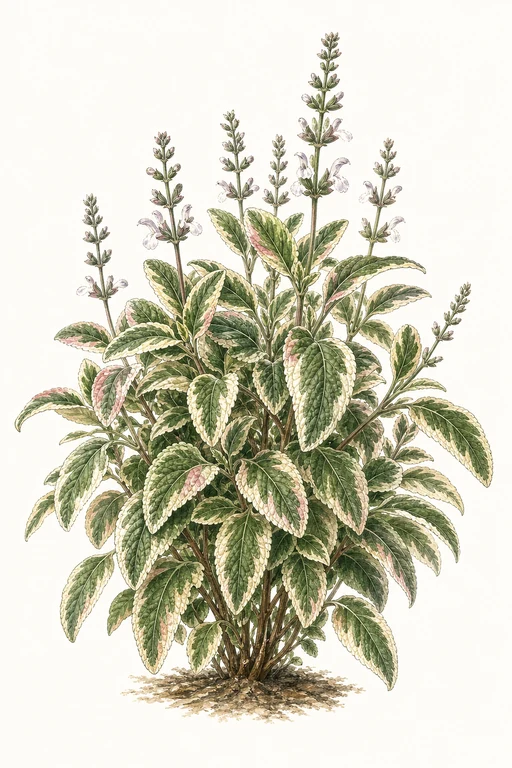
Fragrant, variegated leaves unfurl in a living tapestry—cool sage-green edged in creamy white, with occasional warm blushes that catch the light. Tricolor Sage forms an upright, richly branched mound of aromatic foliage with a softly velvety texture, ideal for fresh bouquets and drying for long-lasting fragrance. Grow it for its striking ornamental presence and its signature herbal character in sachets, potpourri, and fragrant infusions.
Crop Dates
| Milestone | Date |
|---|---|
| Start Indoors | Feb 13th |
| Last Frost | Apr 10th |
| Transplant / Sow Outdoors | Apr 10th |
| Harvest Begins | Jun 24th |
| Harvest Ends | Oct 28th |
Crop Details
| Trait | Value |
|---|---|
| Days to Maturity | 75 |
| Sun Requirements | Full Sun |
| Growth Habit | Upright |
| Support Needed | None |
| Planting Depth | Normal |
| Germination Temp (°F) | 70 |
| Min Soil Temp (°F) | 60 |
| Min Night Temp (°F) | 50 |
| Harden Off (days) | 7 |
Recommended Companions


Frequently Asked Questions
What pest or disease is most likely on Salvia officinalis (tricolor sage), and what should I do?
How do I know when to harvest tricolor sage (Salvia officinalis)?
Fragrant, variegated leaves unfurl in a living tapestry—cool sage-green edged in creamy white, with occasional warm blushes that catch the light. Tricolor Sage forms an upright, richly branched mound of aromatic foliage with a softly velvety texture, ideal for fresh bouquets and drying for long-lasting fragrance. Grow it for its striking ornamental presence and its signature herbal character in sachets, potpourri, and fragrant infusions.
Sowing Tips

Transplant Conditions
Wait until soil reaches 60°F and nights stay above 50°F before moving outdoors. Harden off for 7 days first.
Expert Note

Grow tricolor sage in full sun with well-drained soil, and start thinning/harvesting lightly the first season to encourage a compact, woody habit.