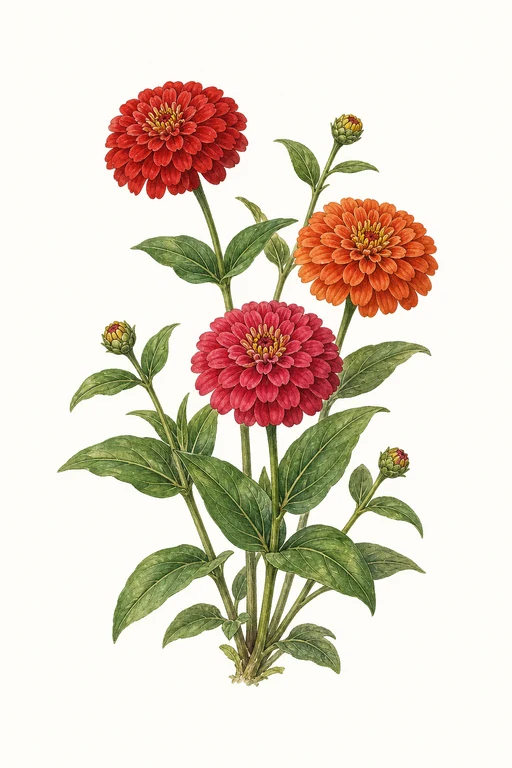
Zinnia
60d to harvest
Sunlight seems to pour straight through Zinnia’s petals—bold, saturated blooms with a velvety, layered look that holds its color with remarkable confidence. Expect sturdy stems and a generous flush of flowers in about 60 days, making it a standout for fresh bouquets and long-lasting arrangements. Drought-tolerant and sun-loving, Zinnia thrives where other annuals hesitate, rewarding gardeners with a vivid, garden-to-vase showpiece all season long.
Crop Dates
| Milestone | Date |
|---|---|
| Start Indoors | Direct Sow |
| Last Frost | Apr 10th |
| Transplant / Sow Outdoors | Apr 10th |
| Harvest Begins | Jun 9th |
| Harvest Ends | Oct 28th |
Crop Details
| Trait | Value |
|---|---|
| Days to Maturity | 60 |
| Sun Requirements | Full Sun |
| Growth Habit | Upright |
| Support Needed | None |
| Planting Depth | Surface |
| Germination Temp (°F) | 75 |
| Min Soil Temp (°F) | 70 |
| Min Night Temp (°F) | 50 |
| Harden Off (days) | Not Required |
Recommended Companions
Frequently Asked Questions
Why are my Zinnia elegans leaves turning yellow and spots showing up, and what should I do?
Zinnia elegans commonly develops powdery mildew and leaf-spot issues, especially when foliage stays wet or air movement is poor. Water at the soil line, space plants so they don’t crowd, and remove the worst affected leaves to slow spread. If it’s actively spreading, spray with a labeled fungicide for powdery mildew/leaf spot and reapply according to the label (often every 7–14 days).
How often should I water Zinnia elegans during the main growing phase?
During active growth (about weeks 2–6), keep the soil evenly moist but not soggy—about 1 inch of water per week total, split if temperatures are very hot. Water deeply when the top 1 inch of soil feels dry, and avoid wetting the leaves to prevent mildew. Once plants are established, let the top layer dry slightly between waterings to keep roots healthy.