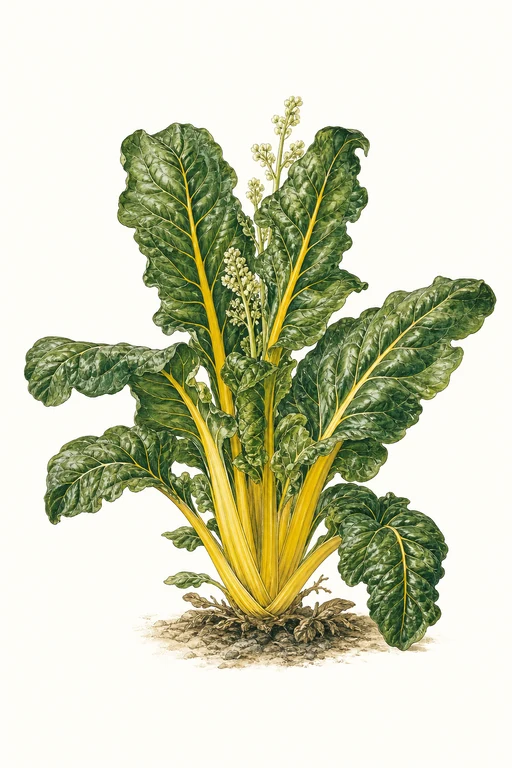
Chard 'Golden Giant'
🌱 55d to harvest
Rosette
Sunlit stems are the first delight of Chard ‘Golden Giant’—a bold, warm golden-yellow that glows against lush, deep-green leaves.…
Crop Dates
| Milestone | Date |
|---|---|
| Start Indoors | Direct Sow Anytime |
| Last Frost | Apr 1st |
| Transplant / Sow Outdoors | Apr 1st |
| Harvest Begins | May 26th |
| Harvest Ends | Nov 5th |
Crop Details
| Trait | Value |
|---|---|
| Days to Maturity | 55 |
| Sun Requirements | Full Sun |
| Growth Habit | Rosette |
| Support Needed | None |
| Planting Depth | Normal |
| Germination Temp (°F) | 70 |
| Min Soil Temp (°F) | 40 |
| Min Night Temp (°F) | 28 |
| Harden Off (days) | 5 |
Recommended Companions
Frequently Asked Questions
What’s a common chard (Beta vulgaris var. cicla) pest or disease problem, and how do I fix it?
Leaf spot and downy mildew can show up as dark spots or fuzzy, gray growth on chard leaves, especially when foliage stays wet. Remove and discard infected leaves, water at the soil line (not overhead), and improve airflow by spacing plants so leaves don’t stay damp. If issues persist, use a labeled fungicide for edible leafy greens and restart with fresh soil if the problem is severe.
How often should I water Swiss chard during the main growing phase?
During the main leaf-growing phase, keep the soil consistently evenly moist—about 1 inch of water per week total, adjusted for heat and rainfall. Water when the top 1 inch of soil starts to dry, aiming for deep soaking rather than frequent light sprinkles. Avoid letting it swing between dry and soggy, which can reduce leaf size and increase disease pressure in Beta vulgaris var. cicla.
How can I tell when Swiss chard ‘Golden Giant’ is ready to harvest?
Harvest when leaves are large enough to eat—typically around 55 days, with plants forming a solid crown and thick petioles (stalks) that feel firm. Cut outer leaves first (snipping near the base) while young inner leaves keep growing for repeat harvests. If leaves become very tough or overly fibrous, stop taking the oldest outer leaves and harvest only the newer, more tender ones.