
Early Jersey Wakefield
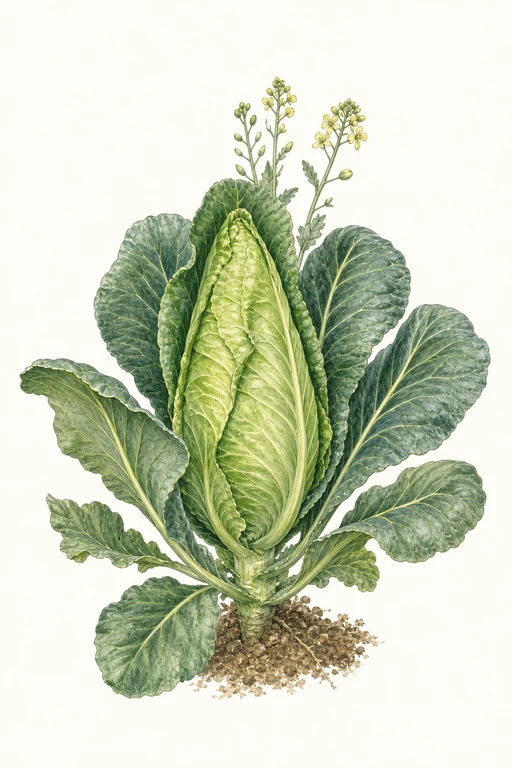
Sweetly crisp and cool to the senses, Early Jersey Wakefield forms compact, medium-sized heads with a tender, pale-green interior and a gently sweet, cabbage-forward flavor. The leaves are finely textured and tightly layered, creating a satisfying crunch that holds beautifully from garden to table. Ideal for early-season harvests, it shines in fresh salads, slaws, and quick pickling, and it also roasts up with a mellow, comforting sweetness.
Crop Dates
| Milestone | Date |
|---|---|
| Start Indoors | Mar 4th |
| Last Frost | Apr 1st |
| Transplant / Sow Outdoors | Mar 25th |
| Harvest Begins | May 24th |
| Harvest Ends | Nov 5th |
Crop Details
| Trait | Value |
|---|---|
| Days to Maturity | 60 |
| Sun Requirements | Full Sun |
| Growth Habit | Rosette |
| Support Needed | None |
| Planting Depth | Normal |
| Germination Temp (°F) | 75 |
| Min Soil Temp (°F) | 45 |
| Min Night Temp (°F) | 35 |
| Harden Off (days) | 6 |
Recommended Companions


Frequently Asked Questions
What pest or disease commonly affects Brassica oleracea var. capitata (Early Jersey Wakefield cabbage), and how do I control it?
How can I tell when Early Jersey Wakefield cabbage is ready to harvest?
Sweetly crisp and cool to the senses, Early Jersey Wakefield forms compact, medium-sized heads with a tender, pale-green interior and a gently sweet, cabbage-forward flavor. The leaves are finely textured and tightly layered, creating a satisfying crunch that holds beautifully from garden to table. Ideal for early-season harvests, it shines in fresh salads, slaws, and quick pickling, and it also roasts up with a mellow, comforting sweetness.
Sowing Tips

Transplant Conditions
Wait until soil reaches 45°F and nights stay above 35°F before moving outdoors. Harden off for 6 days first.
Expert Note

Start indoors for steady early head formation, then transplant right around last frost into cool weather for compact, split-resistant heads.