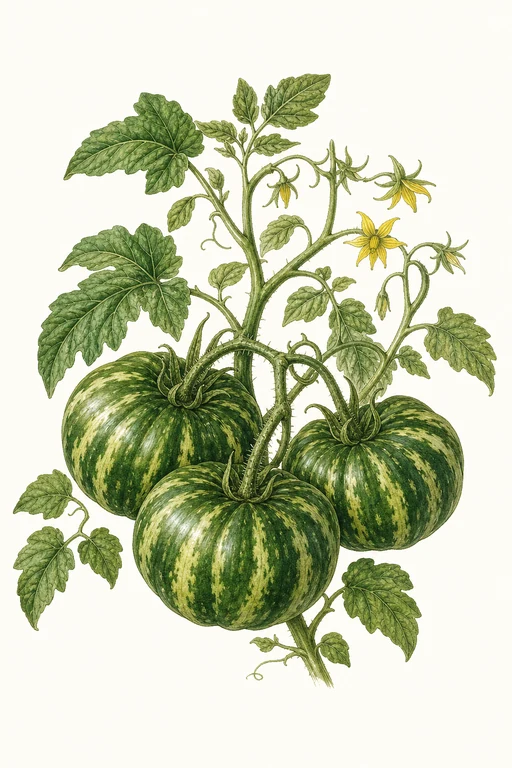
Big Green Zebra
85d to harvest
Sun-warmed and strikingly patterned, Big Green Zebra tomatoes bring a cool, smoky sweetness wrapped in dramatic green-and-cream striping. At maturity, the fruit is large and slice-ready, with a juicy, tender flesh and a balanced, lightly tangy bite that shines in fresh salads and vibrant salsas. Grow this 85-day standout for its showy, zebra-striped presence in the garden and its satisfying, garden-fresh flavor in everyday slicing favorites.
Crop Dates
| Milestone | Date |
|---|---|
| Start Indoors | Feb 2nd |
| Last Frost | Mar 23rd |
| Transplant / Sow Outdoors | May 18th |
| Harvest Begins | Aug 11th |
| Harvest Ends | Nov 12th |
Crop Details
| Trait | Value |
|---|---|
| Days to Maturity | 85 |
| Sun Requirements | Full Sun |
| Growth Habit | Indeterminate |
| Support Needed | Cage |
| Planting Depth | Deep |
| Germination Temp (°F) | 75 |
| Min Soil Temp (°F) | 60 |
| Min Night Temp (°F) | 50 |
| Harden Off (days) | 10 |
Recommended Companions
Frequently Asked Questions
Big Green Zebra tomato leaves have yellow spots with a dusty gray fuzz—what pest/disease is it and what should I do?
That pattern is most consistent with gray mold (Botrytis) or early fungal leaf/fruit rot, which flares in humid conditions and on dense foliage. Remove and trash affected leaves immediately, thin the plant so air can circulate, and water at the soil line (not over the canopy). If it keeps spreading, spray a labeled tomato fungicide at first signs and repeat according to the product label.
How often should I water Big Green Zebra during the main growing phase to prevent cracking and blossom-end rot?
From when plants start flowering through fruit fill, aim for evenly moist soil: about 1–1.5 inches of water per week, split into 2–3 deep waterings if it’s hot or windy. Check by digging 1 inch down—water when that layer starts to dry, but don’t let the soil swing from very dry to very wet. Mulch around the stems to stabilize moisture and reduce tomato cracking.