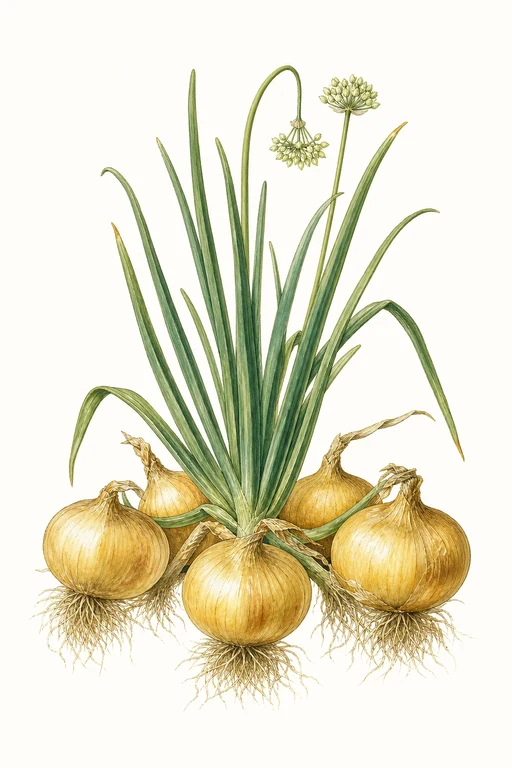
Braddock
110d to harvest
Braddock Yellow Onion brings a golden, sunset-bright sweetness with a crisp, juicy bite and a fine, papery skin that peels away cleanly. At maturity it forms well-filled bulbs with a classic globe-to-flat silhouette, delivering a balanced flavor that shines when roasted low and slow, stirred into savory sauces, or brightened for pickling. A dependable 110-day choice for gardeners who want handsome, storage-worthy onions with a vivid market look and satisfying texture.
Crop Dates
| Milestone | Date |
|---|---|
| Start Indoors | Direct Sow |
| Last Frost | Mar 23rd |
| Transplant / Sow Outdoors | Mar 16th |
| Harvest Begins | Jul 4th |
| Harvest Ends | Nov 12th |
Crop Details
| Trait | Value |
|---|---|
| Days to Maturity | 110 |
| Sun Requirements | Full Sun |
| Growth Habit | Bulbing |
| Support Needed | None |
| Planting Depth | Normal |
| Germination Temp (°F) | 70 |
| Min Soil Temp (°F) | 45 |
| Min Night Temp (°F) | 28 |
| Harden Off (days) | 7 |
Recommended Companions
Frequently Asked Questions
How often should I water Braddock during its main growth phase?
During the main growth phase, keep the root zone evenly moist by watering about 1–2 times per week, giving enough water to moisten the top 6–8 inches of soil. Let the surface dry slightly between waterings, but don’t allow the soil to dry out more than about an inch deep—Braddock will suffer and fruit/heads can develop poorly. Mulch helps stabilize moisture, reducing the swings that trigger stress and disease.
How can I tell when Braddock is ready to harvest?
Start checking around day 110, or earlier if your conditions are consistently warm. Harvest when the plants reach full size and the crop-specific maturity signs are met: for example, look for firm, fully developed heads/produce with the characteristic color for Braddock and no lingering “green” immaturity. If you’re unsure, cut one sample plant—if the interior is fully filled and firms up after a day, harvest the rest promptly to avoid quality decline.