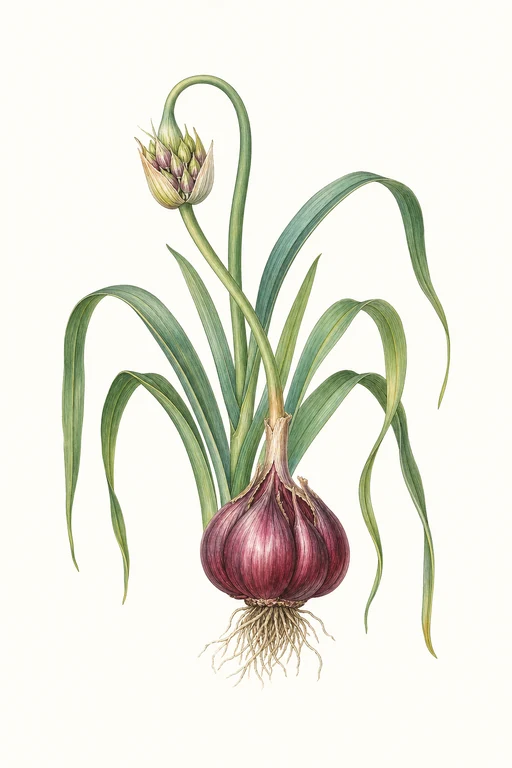
Chesnok Red
Garlic
🌱 180d to harvest
Bulbing
Chesnok Red brings a bold, lingering aroma with a rich, savory depth that feels almost velvety on the palate. Expect medium-to-la…
Crop Dates
| Milestone | Date |
|---|---|
| Start Indoors | Direct Sow |
| Last Frost | Mar 23rd |
| Transplant / Sow Outdoors | Jan 12th |
| Harvest Begins | Jul 11th |
| Harvest Ends | Nov 12th |
Crop Details
| Trait | Value |
|---|---|
| Days to Maturity | 180 |
| Sun Requirements | Full Sun |
| Growth Habit | Bulbing |
| Support Needed | None |
| Planting Depth | Normal |
| Germination Temp (°F) | 50 |
| Min Soil Temp (°F) | 40 |
| Min Night Temp (°F) | 28 |
| Harden Off (days) | Not Required |
Recommended Companions
Frequently Asked Questions
What’s the most common disease problem for Allium sativum (Chesnok Red garlic), and how do I manage it?
Garlic commonly suffers from white rot (Sclerotium cepivorum), which causes yellowing, stunting, and white fungal growth at the base; once present, it can persist in soil. Prevent it by planting in well-drained beds, avoiding replanting garlic/alliums in the same spot for several years, and using only clean, firm seed cloves from healthy stock. If you see plants collapsing with basal white growth, remove and discard them (don’t compost) and treat surrounding soil as contaminated to reduce spread.
How often should I water Allium sativum during its main growth phase, and what soil moisture level should I keep?
After sprouting, keep the soil consistently lightly moist for good leaf growth, typically watering about 1–2 times per week depending on rainfall and your soil texture. Aim for “damp but not soggy”: the bed should drain quickly, with the top 1 inch drying slightly between waterings to prevent bulb diseases. Reduce watering in late season (when scapes form and leaves start to yellow) so bulbs can cure instead of staying wet.
How can I tell when Chesnok Red garlic is ready to harvest?
Harvest when about 2–3 leaves remain green and the rest have browned and dried, usually around 180 days from planting. Loosen one bulb carefully to check: cloves should be plump and the outer skins should be papery and intact. If cloves are still soft or the skins rub off easily, leave the bulbs in the ground a bit longer.