
Georgia Rattlesnake
Onion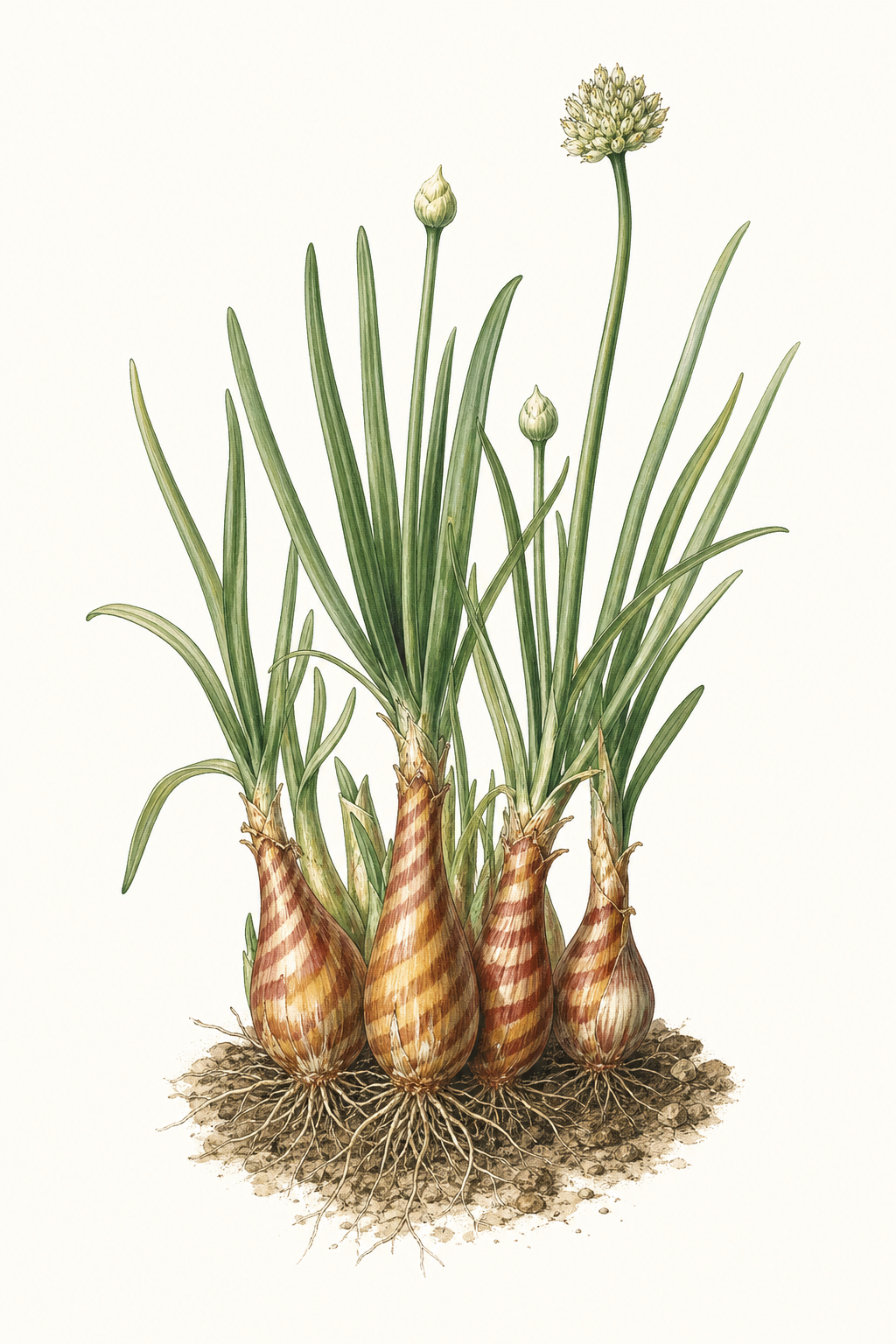
Sweet and richly aromatic, Georgia Rattlesnake onions bring a gentle, honeyed flavor with a crisp, juicy bite that stays tender f…
Crop Dates
| Milestone | Date |
|---|---|
| Start Indoors | Direct Sow |
| Last Frost | Mar 23rd |
| Transplant / Sow Outdoors | Mar 23rd |
| Harvest Begins | Jun 21st |
| Harvest Ends | Nov 12th |
Crop Details
| Trait | Value |
|---|---|
| Days to Maturity | 90 |
| Sun Requirements | Full Sun |
| Growth Habit | Bulbing |
| Support Needed | None |
| Planting Depth | Normal |
| Germination Temp (°F) | 70 |
| Min Soil Temp (°F) | 45 |
| Min Night Temp (°F) | 28 |
| Harden Off (days) | Not Required |
Recommended Companions
Frequently Asked Questions
What pest or disease most often affects Allium cepa (Georgia Rattlesnake onions), and how can I manage it?
How often should I water Georgia Rattlesnake onions during active growth?
How do I know when Georgia Rattlesnake onions are ready to harvest?
Sweet and richly aromatic, Georgia Rattlesnake onions bring a gentle, honeyed flavor with a crisp, juicy bite that stays tender from garden to table. The bulbs mature in about 90 days with an eye-catching, elongated silhouette and distinctive “rattlesnake” striping—golden-brown skins over a pale, succulent interior. Grow them for fresh slicing, standout salads, and caramelizing-style sweetness in sauces and roasts, where their mild character shines.
Sowing Tips

Transplant Conditions
Wait until soil reaches 45°F and nights stay above 28°F before moving outdoors.
Expert Note

Treat it like a true onion: transplant/set bulbs only when soil is workable and cool weather is stable, then avoid excessive nitrogen to keep bulbs forming.