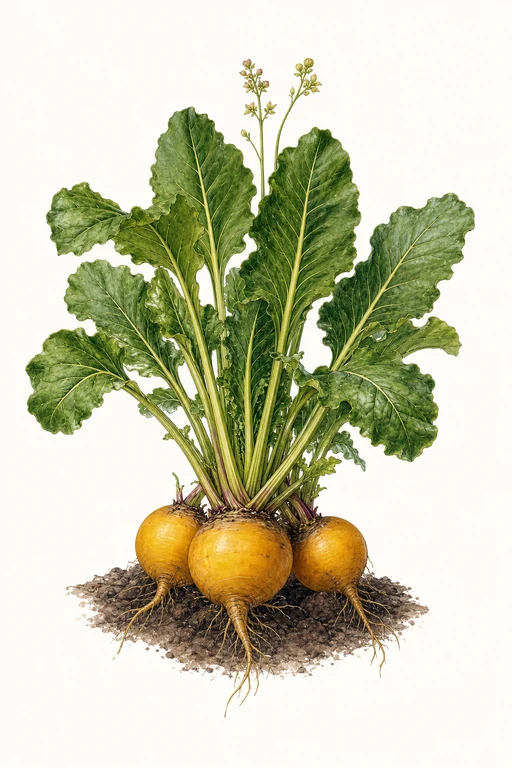
Golden Beet
Beet
🌱 60d to harvest
Rosette
Sunlit and sweet, Golden Beet delivers a mellow, honeyed flavor with tender, fine-grained flesh that stays silky from garden to t…
Crop Dates
| Milestone | Date |
|---|---|
| Start Indoors | Direct Sow |
| Last Frost | Mar 23rd |
| Transplant / Sow Outdoors | Mar 16th |
| Harvest Begins | May 15th |
| Harvest Ends | Nov 12th |
Crop Details
| Trait | Value |
|---|---|
| Days to Maturity | 60 |
| Sun Requirements | Full Sun |
| Growth Habit | Rosette |
| Support Needed | None |
| Planting Depth | Normal |
| Germination Temp (°F) | 55 |
| Min Soil Temp (°F) | 45 |
| Min Night Temp (°F) | 35 |
| Harden Off (days) | Not Required |
Recommended Companions
Frequently Asked Questions
What pest or disease most commonly affects golden beet (Beta vulgaris subsp. vulgaris), and what should I do?
Cercospora leaf spot is a common problem, showing as tan to brown spots with darker edges that spread and cause leaf yellowing. Remove affected leaves early and avoid overhead watering to slow spread; if it keeps worsening, switch to a preventative copper-based fungicide labeled for beets and follow the label timing. Watch also for aphids—spray plants with a strong water jet and, if needed, use insecticidal soap labeled for vegetables.
How often should I water golden beets during their main growing phase?
During the 4–6 weeks when roots are swelling, keep the soil consistently evenly moist—about 1 inch (2.5 cm) of water per week, split into 2–3 waterings if it’s hot or windy. Let the top 1 inch of soil dry slightly between waterings, but don’t let the root zone go dry, or roots can turn woody and growth slows. Mulch can help maintain steady moisture for Beta vulgaris roots.
How do I tell when golden beets are ready to harvest (Beta vulgaris subsp. vulgaris)?
Start checking at around 50–60 days: harvest when the roots are about 1.5–3 inches (4–8 cm) across for best sweetness and tenderness. You can gently pull one plant to confirm size; if it’s still small, leave the rest to size up. Harvest promptly once they reach the desired diameter, because oversized beet roots can become tougher and more fibrous.