
Lebanese Oregano
Oregano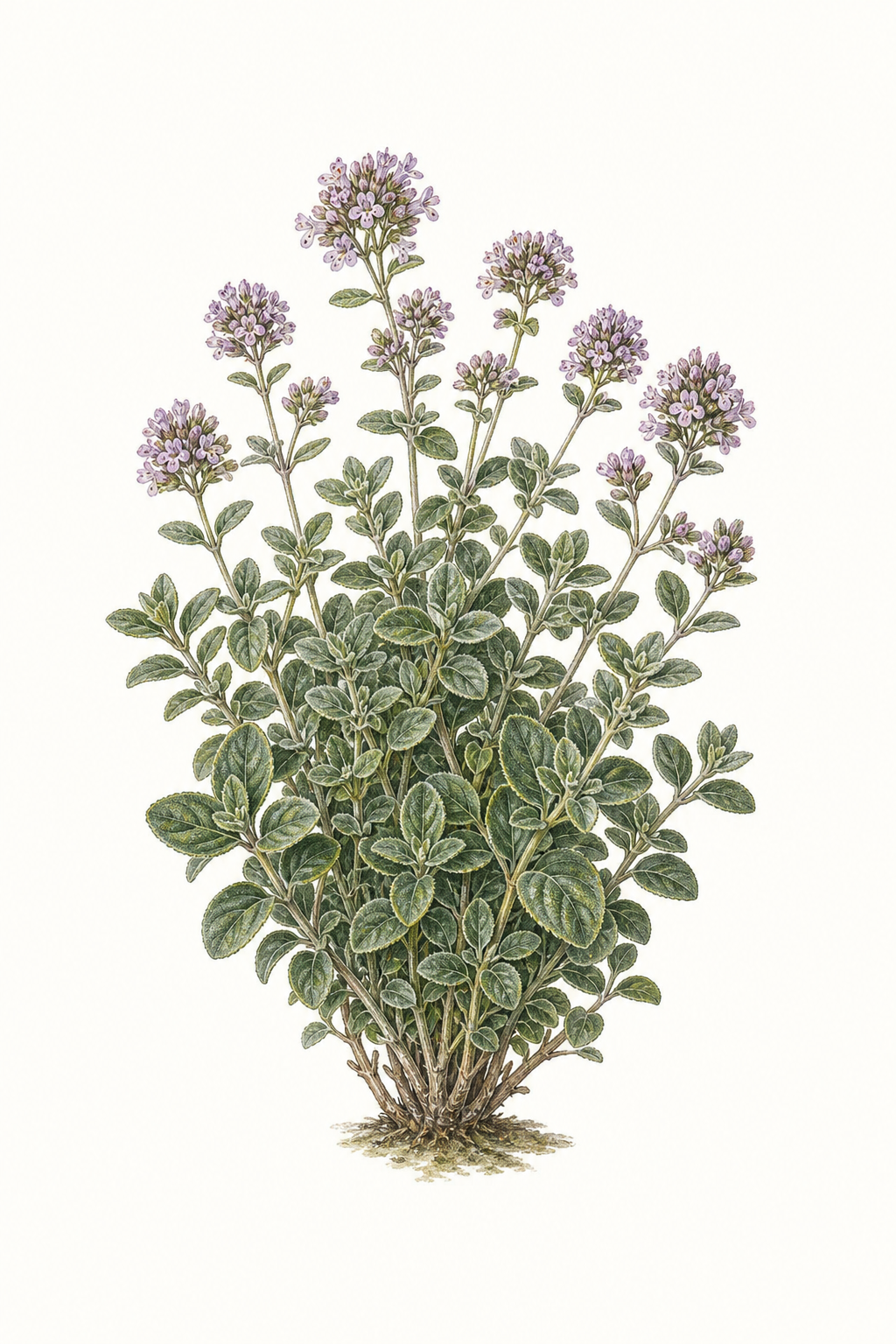
Sun-warmed and intensely aromatic, Lebanese Oregano unfurls a bold, Mediterranean fragrance with a peppery, resinous lift and a c…
Crop Dates
| Milestone | Date |
|---|---|
| Start Indoors | Feb 23rd |
| Last Frost | Mar 23rd |
| Transplant / Sow Outdoors | Apr 6th |
| Harvest Begins | Jun 15th |
| Harvest Ends | Nov 12th |
Crop Details
| Trait | Value |
|---|---|
| Days to Maturity | 70 |
| Sun Requirements | Full Sun |
| Growth Habit | Upright |
| Support Needed | None |
| Planting Depth | Normal |
| Germination Temp (°F) | 70 |
| Min Soil Temp (°F) | 60 |
| Min Night Temp (°F) | 35 |
| Harden Off (days) | 7 |
Recommended Companions
Frequently Asked Questions
What pests or diseases commonly affect Origanum syriacum (Lebanese oregano), and how do I control them?
How often should I water Lebanese oregano during its main growing phase?
How can I tell when Origanum syriacum is ready to harvest (and how much can I take)?
Sun-warmed and intensely aromatic, Lebanese Oregano unfurls a bold, Mediterranean fragrance with a peppery, resinous lift and a clean, herbal finish. The foliage forms dense, upright clumps with small, velvety leaves that hold their character through harvest, delivering a concentrated flavor that shines in everyday herb blends. Grow it for fresh use and for drying—its leaves keep their fragrance beautifully for sauces, roasted vegetable seasonings, and pickling brines.
Sowing Tips

Transplant Conditions
Wait until soil reaches 60°F and nights stay above 35°F before moving outdoors. Harden off for 7 days first.
Expert Note

Start seeds indoors for uniform stands, but harden off well and plant in fast-draining soil to prevent stem rot.