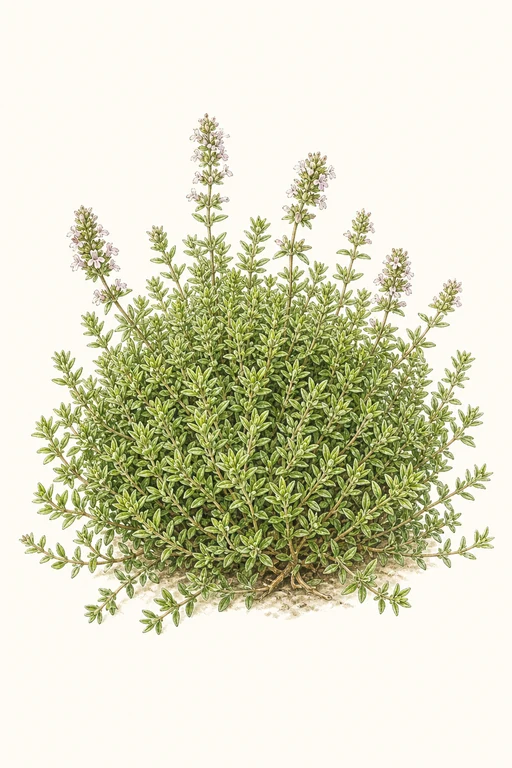
Lime Thyme
Thyme
🌱 70d to harvest
Upright
Sunlit citrus—lime-bright and thyme-green—rises from Lime Thyme with a fragrance that feels like a fresh squeeze of lemony air. L…
Crop Dates
| Milestone | Date |
|---|---|
| Start Indoors | Feb 9th |
| Last Frost | Mar 23rd |
| Transplant / Sow Outdoors | Apr 6th |
| Harvest Begins | Jun 15th |
| Harvest Ends | Nov 12th |
Crop Details
| Trait | Value |
|---|---|
| Days to Maturity | 70 |
| Sun Requirements | Full Sun |
| Growth Habit | Upright |
| Support Needed | None |
| Planting Depth | Normal |
| Germination Temp (°F) | 70 |
| Min Soil Temp (°F) | 55 |
| Min Night Temp (°F) | 50 |
| Harden Off (days) | 7 |
Recommended Companions
Frequently Asked Questions
What pest or disease commonly affects Thymus citriodorus (lime thyme), and how do I treat it?
Lime thyme is prone to root rot and stem dieback when the soil stays wet, especially if air movement is poor. Water only when the top 1 inch (2–3 cm) feels dry, use a fast-draining potting mix, and remove any blackened roots/stems; for persistent issues, re-root healthy tips in fresh, drier media. Watch also for aphids on new growth—spray the shoots with a strong jet of water and, if needed, spot-treat with insecticidal soap.
How often should I water lime thyme (Thymus citriodorus) during the main growing phase?
During active growth, water deeply but infrequently so the soil dries slightly between waterings—aim for watering about once every 7–10 days in typical home conditions, but only when the top 1 inch is dry. In pots, ensure excess water drains freely and never let the pot sit in a saucer of water. Consistent sogginess is the main reason lime thyme develops fungal problems.
How can I tell when lime thyme is ready to harvest?
Begin harvesting around 60–70 days from sowing when plants have formed a sturdy, leafy growth and the stems are well-formed but still flexible. Snip 1/3 or less of the top growth, ideally in the morning, and look for bright, fragrant leaves that feel aromatic when rubbed. Regular light harvesting encourages branching, while letting stems become woody reduces leaf tenderness.